Too many small machines and too few big ones. That’s one of the first mistakes Launch Laundry lists when it talks about new laundromat owners with money but no plan. Drum size looks like a boring spec line, yet it quietly decides who uses your shop, how much each load earns and how long your payback takes.
This guide sticks to what Launch Laundry’s own service pages say about capacity, so you won’t find invented sizes or made-up prices here. Where the site is silent, I’ll say so.
Why Washer Capacity Is a Business Decision, Not Just a Spec
Capacity is how much laundry one cycle can handle. It sounds simple until you realise it touches everything else: how many machines fit in your unit, how many customers each one can serve, and what your dryers need to keep up with.
Launch Laundry’s strategy team treats this as part of a machine mix and technology roadmap, where the washer to dryer ratio is set around how many people you expect through the door. In other words, the question isn’t “which drum is best?” It’s “which drums fit the customers I’m actually going to get?”
If you’re still working out how many machines your space needs overall, start with the laundromat machine capacity guide and come back here for the drum-by-drum side.
What Sizes Does Launch Laundry Actually Talk About?
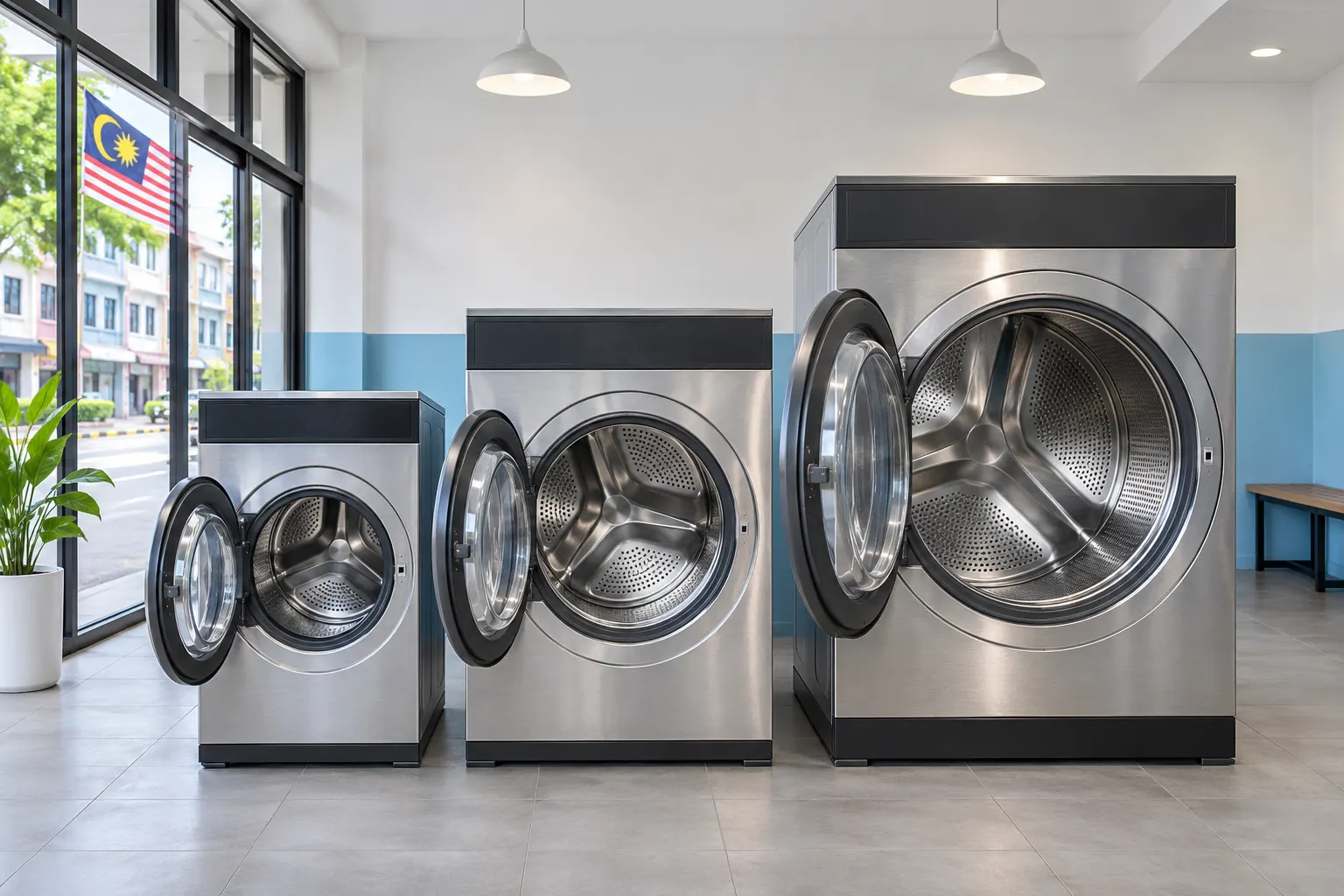
Across its service pages, Launch Laundry mentions a few specific capacities:
-
7kg, 10kg and 15kg are the load sizes recommended in its consultancy work, chosen according to projected traffic.
-
7kg vs 15kg is the comparison used in its research planning, as part of load capacity optimisation.
-
Industrial units come up for outlets serving hotels and hospitals, and the product range includes the W060F and W2110F industrial laundry machines.
The site doesn’t publish a 25kg category or a detailed list of what each drum can hold, so I won’t pretend it does. For exact rated capacities of a specific model, check its product page or ask the team directly.
How to Choose a Drum Size: The Factors the Site Points To
Launch Laundry’s setup service lists what goes into machine mix planning. Here they are in plain terms:
|
Factor |
What it means for drum size |
|---|---|
|
Expected customer volume |
More walk-ins may call for more machines; fewer may call for fewer, bigger ones |
|
Family-sized loads vs single loads |
Different households bring very different amounts of laundry |
|
Peak hour demand |
If everyone arrives at 8pm, you need enough machines to cope without queues |
|
Dryer capacity |
Dryers should match washer throughput so one doesn’t bottleneck the other |
|
Price positioning and competition |
What you charge and what nearby shops offer both shape the mix |
None of these has a universal answer. A student area and a family neighbourhood will want different things, which is exactly why the team recommends studying your location first.
The Two Classic Mistakes
The site highlights two opposite errors, and both come down to drum size.
Too many small machines. The strategy page names this directly: too many small-capacity machines and too few industrial units. A shop full of small drums can look busy but struggle when someone arrives with a big load.
Over-investing in premium machines. The finance advisory page warns against buying high-end equipment without matching customer demand. A large, expensive drum only makes sense if customers actually need it.
The fix for both is the same. Look at who lives and works around you before you decide, not after.
Don’t Forget the Dryers
A washer is only half the job. Launch Laundry’s layout planning specifically calls for dryer capacity to match washer throughput. If your washers turn out loads faster than your dryers can handle, customers stand around waiting, and waiting is how reviews get written.
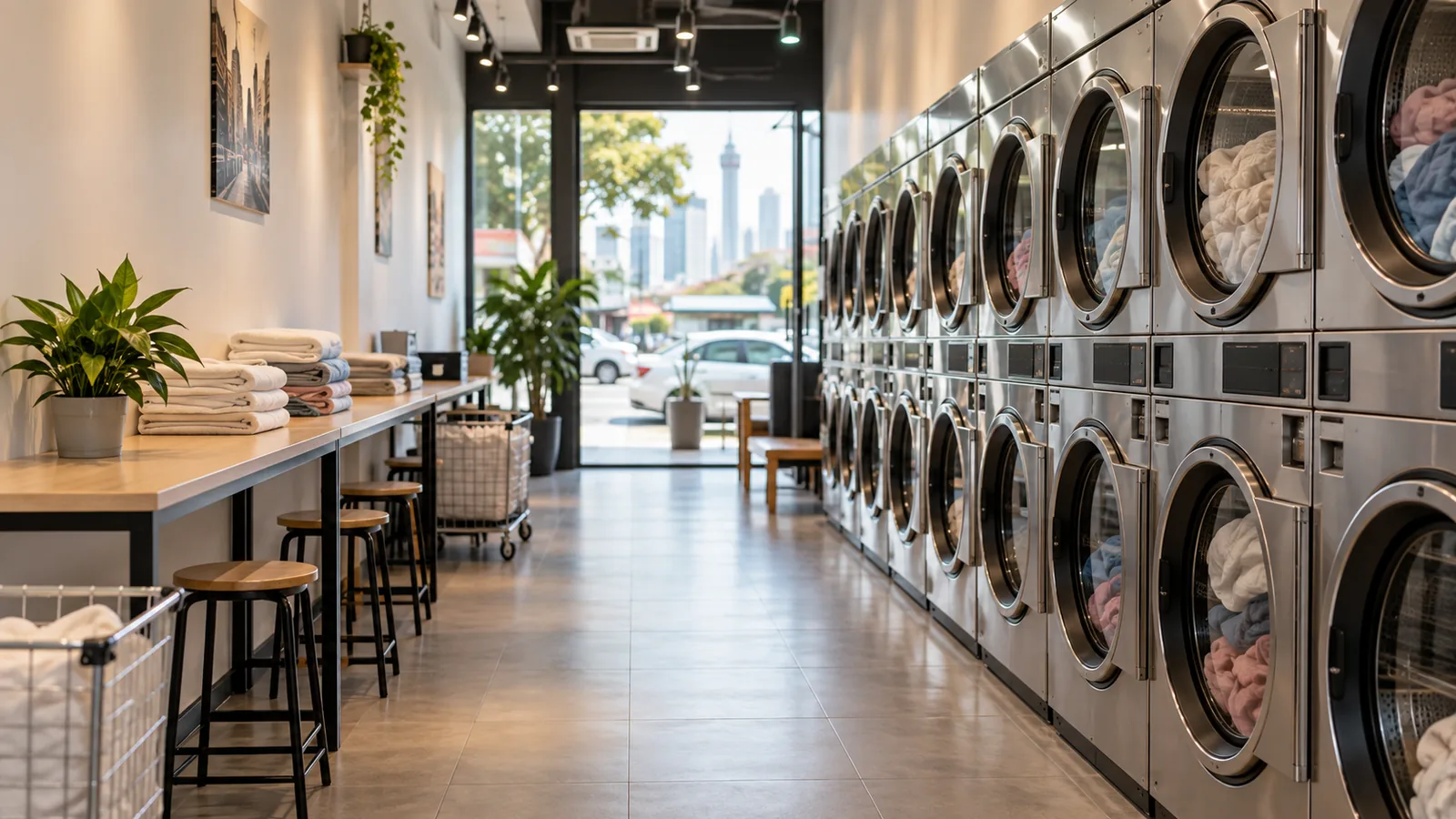
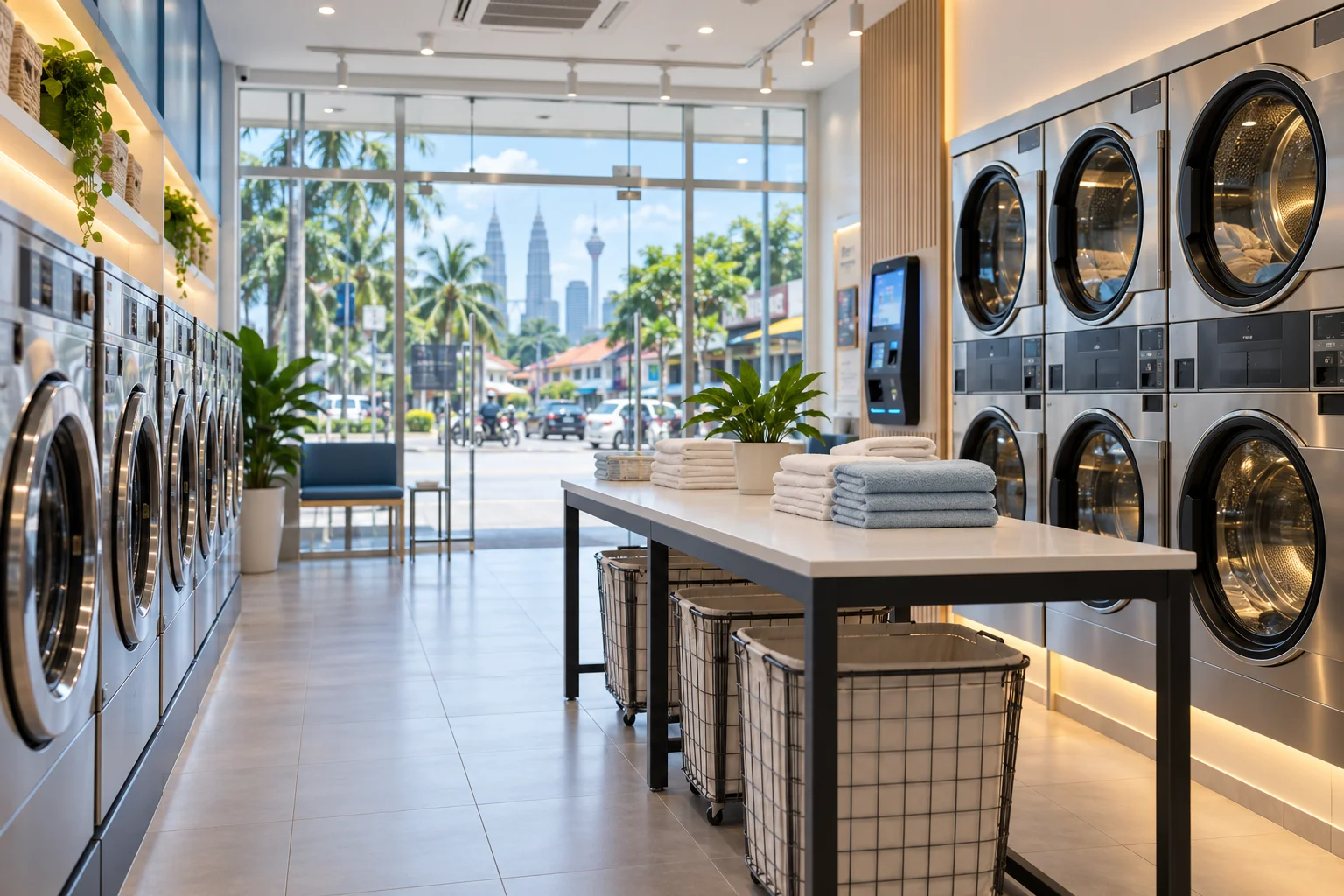
Layout matters here too. The strategy team suggests smart zoning, with washers at the front, dryers at the back and detergent vending near the entrance. They also recommend leaving space for expansion if you plan to scale. Bigger drums take up more room, so think about floor space before you commit to them.
You can look through the commercial washers and dryers available to see what’s on offer across different machine types.
Utilisation: The Number That Matters More Than Drum Size Alone
A big drum that sits idle earns nothing. That’s why Launch Laundry keeps coming back to machine utilisation. Its figures, as stated on its pages:
-
A laundromat running at 60% utilisation, which the site equates to 6 cycles a day per unit, can reach breakeven in 18 to 24 months.
-
Its revenue-growth service sets a target of 70 to 80% utilisation.
-
As an example, a standard 8-washer, 8-dryer laundromat is quoted at RM 280,000 to RM 320,000 in startup costs, depending on machine brand and location.
Treat these as the site’s own reference points, not promises for your shop. If you want to test your own numbers, our walkthrough on estimating laundromat ROI in Malaysia shows how utilisation feeds into payback.
How Drum Size Connects to Pricing
The research planning service describes pricing elasticity studies, which look at how sensitive customers are to changes of RM1 to RM2. That matters for drum size because a larger drum usually supports a different price point than a smaller one, and your customers will only accept the gap if it feels fair.
The site doesn’t give per-size rates, so I haven’t made any up. For the thinking behind setting your own, see how to price wash and dry cycles so they cover your costs. The team also mentions bundled pricing, such as wash plus dry packages, as one way to make bigger loads feel worthwhile.
Keeping Different Drum Sizes Running Smoothly
The more machines you add, the more you’ll want a maintenance routine. Launch Laundry says most outlets benefit from servicing every 4 to 12 weeks, depending on daily cycles, machine age and customer load, and that high-volume shops usually need checks more often.
Most breakdowns build up slowly, through things like lint, worn belts and loose parts, which is why regular commercial laundry machine maintenance and repair is worth planning from the start. A washer that’s down during peak hours costs you far more than the repair itself.
Brand Choices Sit Alongside Size Choices
Once you’ve worked out the capacities you want, you still need to choose who builds them. The site’s pages mention Speed Queen, Electrolux, LG Commercial, Maytag and IPSO in different places, and the homepage highlights Electrolux and Alliance. If you’re weighing options, a side-by-side look at Electrolux, Speed Queen and Alliance machines can help you narrow things down.
A Simple Way to Decide Your Mix
You don’t need a formula. You need answers to a few honest questions:
-
Who lives and works within walking distance of your shop?
-
Do they bring small personal loads, family-sized loads, or both?
-
When will your busiest hours be?
-
Do you plan to serve businesses such as hotels, gyms or clinics later?
-
Will your dryers keep pace with your washers?
-
Is there room to add machines if demand grows?
Write the answers down and use them to brief a specialist. The research planning service for laundry businesses includes a machine mix recommendation based on outlet size, which is the kind of output you’re trying to reach.
Frequently Asked Questions
1. What washer capacities does Launch Laundry mention for laundromats?
Its pages reference 7kg, 10kg and 15kg load sizes, plus industrial units for hotels and hospitals. Exact specs depend on the model, so check the product details.
2. How do I know which drum size suits my customers?
Look at expected volume, whether people bring family-sized or single loads, and your peak hours. The site recommends planning the mix around these.
3. Is it better to buy more small machines or fewer large ones?
The site warns against both extremes. Too many small machines and too few industrial units is a listed pitfall, while over-investing in premium machines without demand is another.
4. Do dryers need to match washer capacity?
Yes. Launch Laundry’s layout planning says dryer capacity should match washer throughput so neither slows the other down.
5. How much does it cost to set up a laundromat with several machines?
The site gives one example: a standard 8-washer, 8-dryer laundromat needing RM 280,000 to RM 320,000, depending on brand and location. Your own figure will differ.
6. How often should commercial washers be serviced?
Launch Laundry says most outlets benefit from servicing every 4 to 12 weeks, with busier shops needing more frequent checks.
7. Can I get help choosing machine sizes for my unit?
Yes. Layout planning and machine mix design are part of the laundromat setup service, and a machine mix recommendation is included in research planning.
8. Where does Launch Laundry offer setup and servicing?
The service pages list Kuala Lumpur, Selangor, Johor Bahru, Penang and Melaka, with other locations discussed case by case.
Match the Drum to the Customer, Then Check the Numbers
Drum size isn’t a contest for the biggest number on the spec sheet. It’s a way of matching your machines to the people who’ll use them, then making sure the dryers, the layout and the utilisation all line up. Get that right and the rest of your numbers get easier.
If you’d like a specialist to look at your actual space, laundromat setup and installation includes site inspection, layout planning and machine mix design. Investors who want a wider view can also look at business consultancy for laundromat investors, which covers machine and vendor selection alongside the financial side. When you’re ready, request a machine layout plan for your unit.