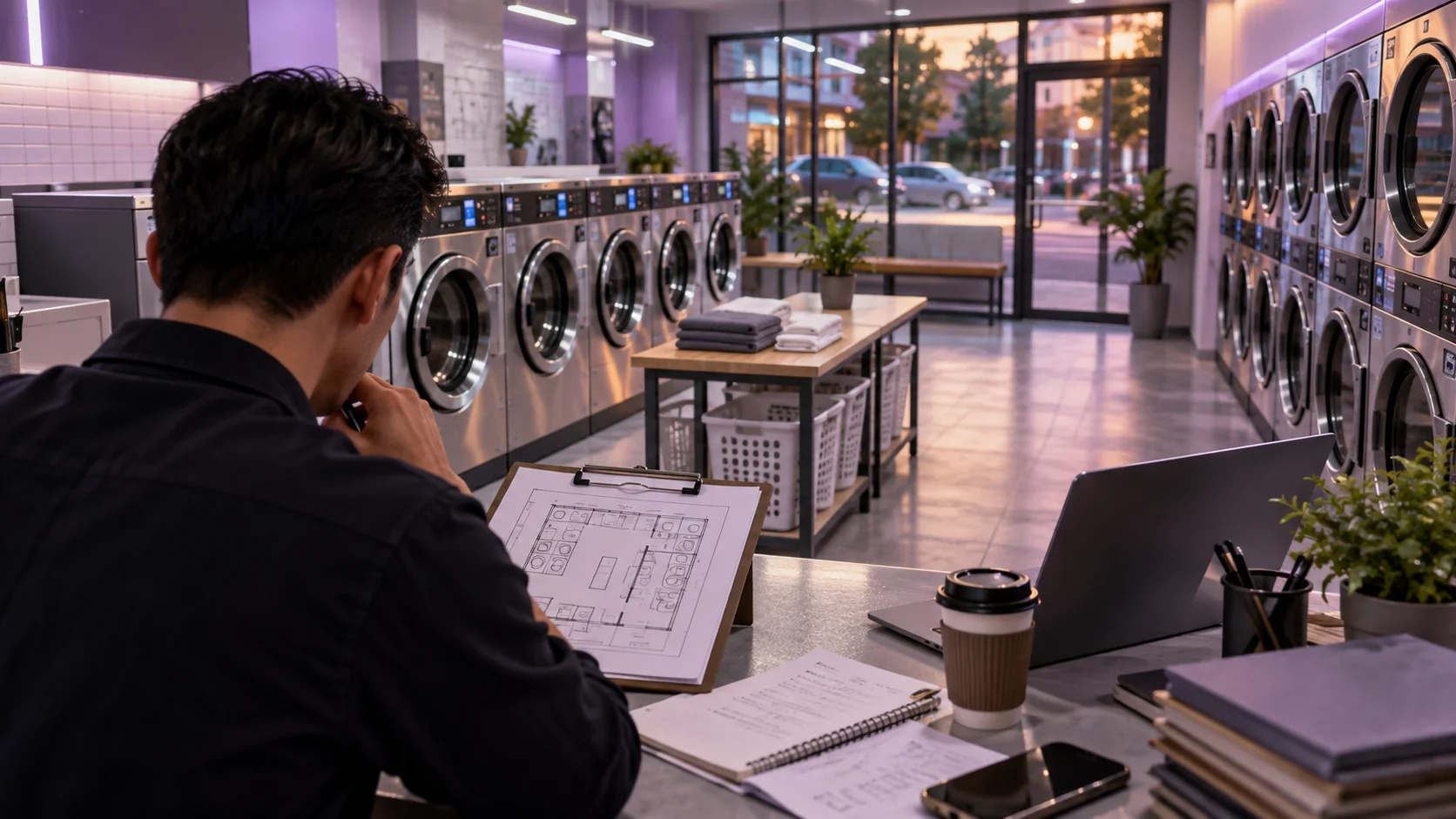
One of the most basic questions that someone opening their first laundry establishment might have is: how many machines do I really need? Having too few would result in customers waiting long hours and going somewhere else while having too many would mean overspending on machines that won't be used much during the day. This article will help calculate the amount of machines needed in order to operate properly.
Why Getting This Right Matters
Machine count and capacity directly affect two things that determine whether your laundromat succeeds: customer experience and your return on investment. Too few machines means frustrated customers waiting around, which drives them to a competitor next time. Too many machines means you've tied up capital in equipment that isn't earning its keep, while also paying rent on space you didn't need to fill.
Step 1: Understand Machine Capacity Basics
Commercial washers and dryers are measured by capacity, usually in kilograms, indicating how much laundry (by weight) they can handle per cycle.
|
Capacity Range |
Typical Use Case |
|
6–10 kg |
Smaller loads, suited to individual customers with lighter laundry needs |
|
12–18 kg |
Standard mid-range capacity, common in most self-service laundromats |
|
20–30 kg |
Larger loads, popular for bulkier items like bedding, curtains, or family-sized loads |
|
35 kg and above |
Commercial-scale capacity, often used for hotel, hospital, or bulk laundry operations |
Most laundromats offer a mix of capacities rather than machines of just one size, giving customers options depending on how much laundry they're bringing in.
Step 2: Estimate Your Expected Customer Footfall
Before deciding on machine count, you need a realistic sense of how many customers you expect per day. This is where the feasibility and demographic research done during site selection becomes genuinely useful.
Questions to help estimate footfall:
-
How many households or units are within a reasonable walking or driving distance of your shop?
-
Is your area dominated by apartments and condos without in-unit washers, or landed homes that likely already have their own machines?
-
Are there nearby student populations, hostels, or worker dormitories that rely heavily on laundromats?
-
What does competitor activity in the area suggest about existing demand?
A shop near dense apartment living or student housing generally sees higher and more consistent footfall than one in an area full of landed homes with private laundry setups.
Step 3: Calculate a Rough Machine Count
Here's a simplified way to think through machine planning, though your supplier can help refine this further based on your specific numbers.
A basic planning approach:
-
Estimate daily expected customer visits based on your footfall research.
-
Estimate average cycle time per wash and dry (commercial cycles typically run 30–45 minutes for washing, and a similar range for drying).
-
Calculate how many cycles a single machine can realistically complete during your operating hours.
-
Divide your expected daily customer visits by that per-machine cycle capacity to estimate how many machines you'd need to avoid excessive wait times.
|
Example Scenario |
Rough Estimate |
|
Expected daily customers |
60 |
|
Operating hours |
14 hours |
|
Average cycle time (wash + dry) |
Roughly 1 hour combined |
|
Machines needed to comfortably serve demand |
Enough to avoid customers waiting more than one cycle during peak hours |
This is just an example; in reality, peak-hour grouping is another consideration in planning (people generally come to the shop at the same time, such as during evening hours or weekend), which determines how many machines are needed to prevent any bottle-necking during the most busy hours.
Step 4: Factor In Your Available Space
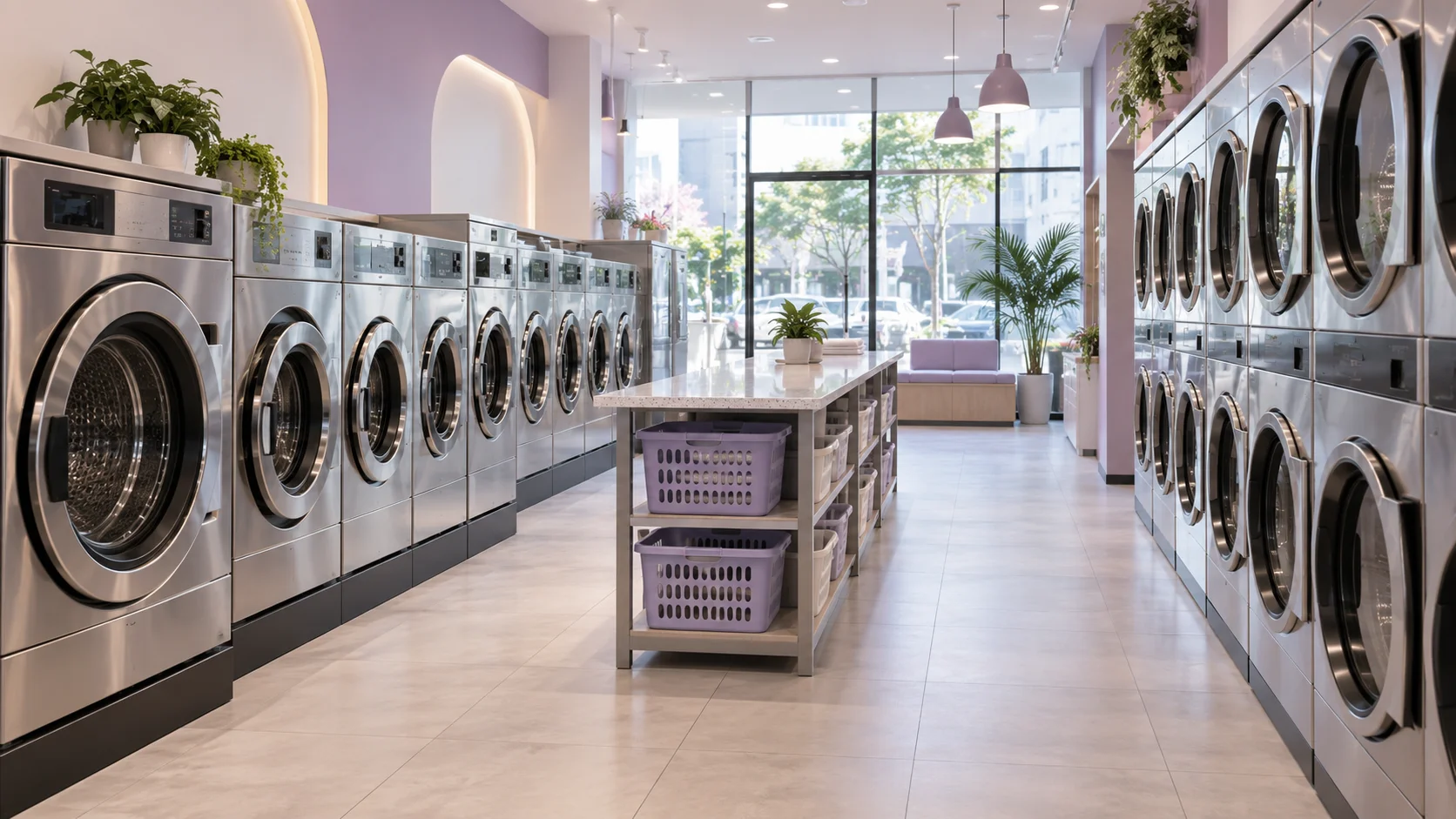
Machine count isn't just about demand, it's also about what physically fits in your shop lot, with enough space left over for comfortable customer movement, seating, and folding areas.
|
Shop Size (approximate) |
Typical Machine Count Range |
|
Small (under 500 sq ft) |
6–10 machines |
|
Medium (500–1,000 sq ft) |
10–18 machines |
|
Large (1,000+ sq ft) |
18–30+ machines |
Don't forget to allow space for:
-
Aisle space between machines for comfortable movement
-
Folding tables or counters
-
Seating area for customers waiting
-
Payment system stations or a small service counter
-
Storage for supplies, spare parts, or cleaning equipment
Cramming in extra machines at the expense of comfortable customer space often backfires an uncomfortable, cramped shop can actually reduce repeat visits, even if you technically have more machines than a competitor.
Step 5: Balance Washer-to-Dryer Ratio
A common mistake first-time owners make is buying an equal number of washers and dryers. In practice, dryers usually need to outnumber washers, because drying typically takes longer than washing, meaning each dryer effectively serves fewer customers per hour than each washer does.
|
Ratio Guideline |
Reasoning |
|
Roughly 1 washer to 1.5 dryers |
Compensates for dryers generally taking longer per cycle than washers |
|
Adjust based on your specific machine cycle times |
Some modern efficient dryers have shorter cycle times, which may reduce how many extra dryers you need |
Getting this ratio wrong is one of the most common and avoidable planning mistakes we see. A shop with too few dryers ends up with washed laundry piling up while customers wait for a free dryer, even if the washers themselves are running smoothly.
Step 6: Plan for Growth, Not Just Day One
Beyond considering just your first day figures, it is worthwhile to consider the feasibility data regarding your location. If your location is deemed to have high growth potential, then you might want to arrange your machines leaving some empty spaces so that in the future, additional machines may be included.
Practical ways to plan for growth:
-
Choose a shop lot with a bit of extra space, even if you don't fill it with machines on day one
-
Confirm your utility setup (water and electrical capacity) can support additional machines later, not just your opening lineup
-
Discuss expansion plans with your supplier when doing your initial installation, so future additions are straightforward rather than requiring a major redo
A Simple Capacity Planning Checklist
-
Investigate the foot traffic and demographic requirements of your area before making the decision on the number of machines to install
-
Estimate the daily customer footfall and their hourly requirements
-
Do a rough calculation on how many machines you need depending on their cycle time and volumes
-
Ensure that your shop has adequate room to accommodate your planned number of machines along with customer space
-
Decide on a washer dryer ratio taking into account that dryers are always required to have more capacity than washers
Frequently Asked Questions
1. How many machines will be there in an average Malaysian laundromat?
This can vary from shop to shop but typically a number of machines in a self-service laundry range between 8-18, depending upon local pedestrian traffic and available space.
2. Should I invest in more washers or more dryers?
More dryers are preferable over washers, as the drying time is higher than that for washing. A typical investment pattern could be around 1 washer to 1.5 dryers, depending on your machines.
3. What machine capacity would be ideal for a residential area?
A mid-range machine capacity of 12-18 kg is appropriate for most households, although having different capacities helps customers.
4. How can I estimate my pedestrian traffic before launching my business?
You may check the number of people in the locality, type of housing (apartments or landed houses), presence of students and workers and presence of competitors in the vicinity.
5. Is it better to start with fewer machines and expand later?
It can be, especially if you're uncertain about actual demand. Just make sure your shop layout and utility setup can support future additions without a major redo.
6. What happens if I buy too many machines for my actual demand?
You risk tying up capital in underused equipment and paying for space you don't need to fill, which reduces your overall return on investment.
7. Does shop size limit how many machines I can install?
Yes, and it's important to leave enough room for aisles, seating, folding space, and a payment counter, not just maximise machine count within your available space.
8. Can Launch Laundry help calculate the right machine count for my shop?
Yes, our market research and business planning service factors in your specific location, footfall estimates, and shop size to recommend a realistic machine count and mix.
Get a Machine Plan Built Around Your Actual Space and Demand
Guessing your machine count can cost you money either way too few machines lose customers, too many wastes capital. Book a free consultation with Launch Laundry, and we'll help you plan the right setup for your specific shop.