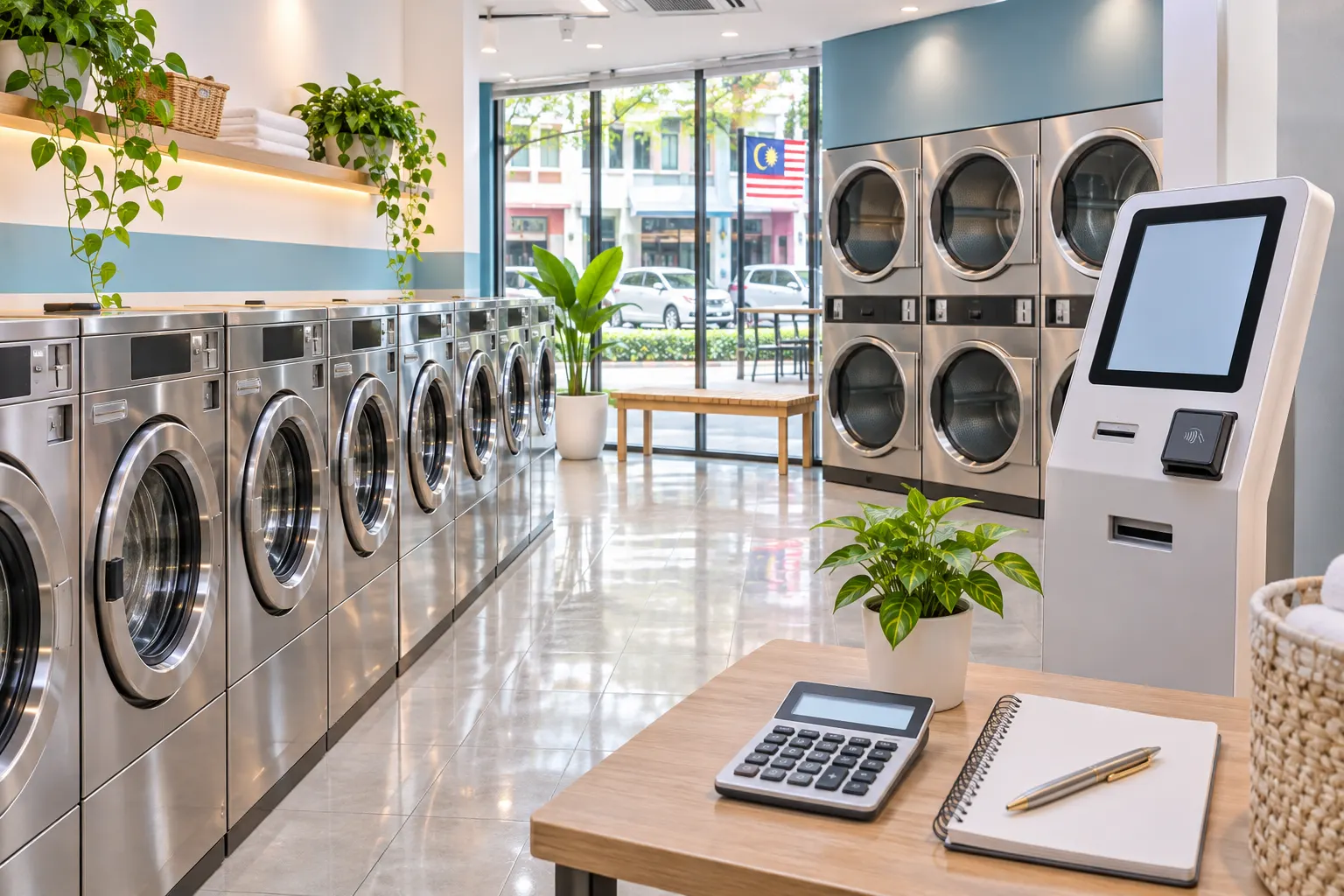
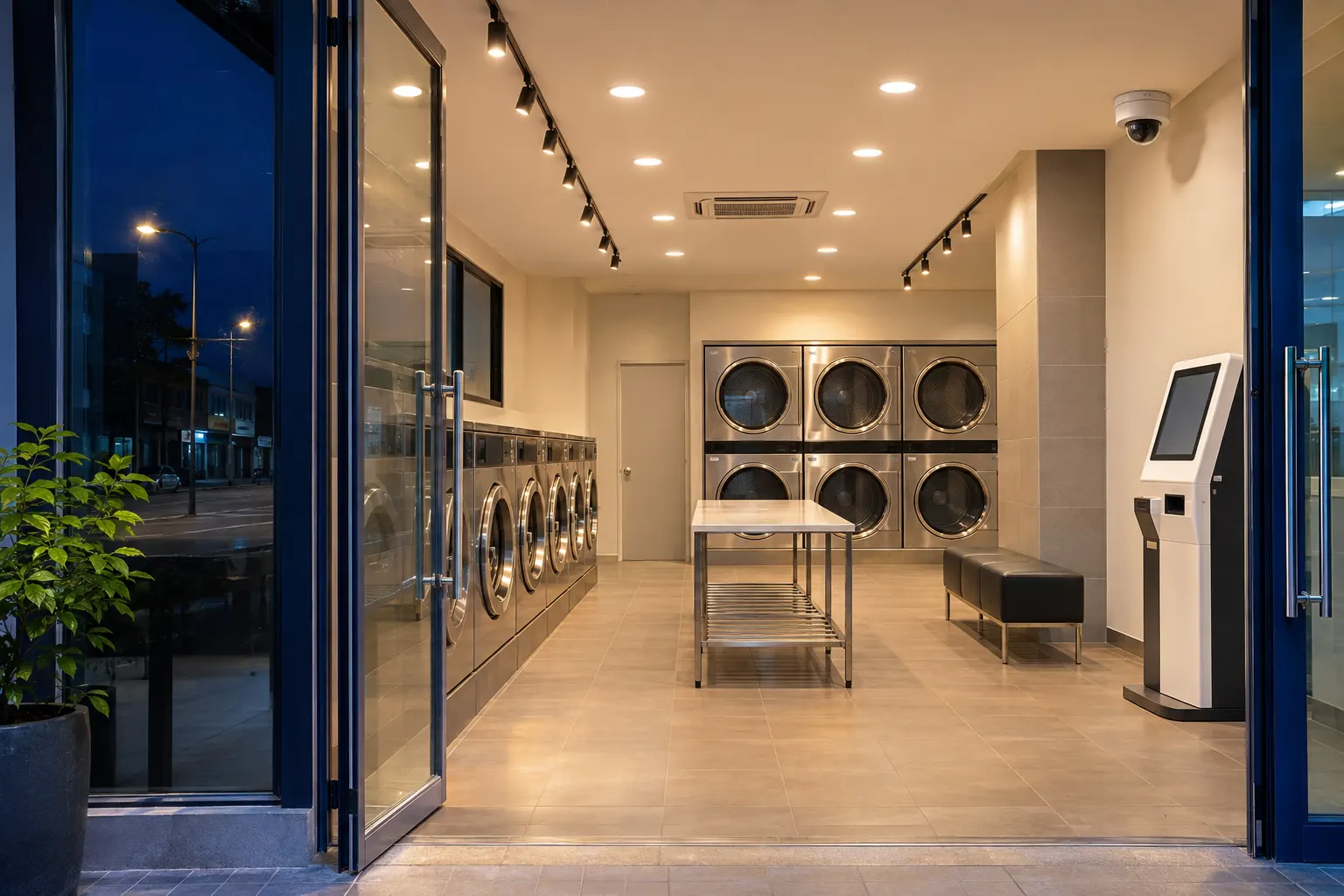
A laundromat with nobody inside still has someone running it. That person just happens to be you, checking a phone app from the car or the sofa. And that’s the whole idea behind an unattended laundromat in Malaysia. You don’t remove the work, you move it somewhere else.
Whether that suits you depends on a few things: where the shop is, who walks in, and how much you trust your own systems. So before you decide to hire a counter person or skip one entirely, it helps to look at what each setup really asks of you.
What “Unattended” Actually Means
Unattended means no permanent staff on the floor. Customers pay at a kiosk or on their phone, start their own machine and leave. Plenty of these shops stay open round the clock.
Attended means somebody is there during opening hours. They might wipe tables, help a confused first-timer, sort out a stuck payment, and keep an eye out for trouble.
Most owners end up somewhere between the two. Staff in the busy evening rush, nobody overnight, a cleaner dropping by twice a day. Think of it like a volume knob, not an on/off button.
The Tools That Replace a Person
Take the staff away and four things have to pick up the slack.
Remote monitoring. Modern machines can tell you what they’re doing. Which washer is running, which one threw an error, how much came in today. You get an alert when something stops, so you’re not finding out from a one-star review. The same idea sits behind the real-time tracking of usage and maintenance that newer commercial machines are built around, and it’s honestly what makes the whole unattended model possible.
Cameras. They put people off doing silly things, and they give you proof when somebody does. Point them at the door, the payment kiosk and the main floor. One catch though. Once the cameras go up, the rules around recording customers and handling their data under PDPA start to apply, so get the signage and storage sorted before opening day, not after.
Payments. With no cashier, people need a simple way to pay. Cash means collecting, counting and carrying it around. Cashless means fewer trips and tidier records. How much hassle you take on really depends on whether you go for coin-operated machines or app-based payment, so it’s worth thinking that through early.
A visit routine. Software can’t clean a lint filter. Someone still needs to come by, wipe down, restock and check the machines. Even a “no staff” shop has a human schedule behind it.
Attended vs Unattended at a Glance
|
Unattended |
Attended |
|
|
Ongoing labour cost |
Low, mostly visits or part-time help |
Higher, regular wages |
|
Opening hours |
Easy to stay open 24 hours |
Tied to shifts |
|
Helping customers |
Phone, signage, app support |
Face to face |
|
Security |
Relies on cameras and lighting |
Staff presence deters trouble |
|
Upkeep |
Depends on your visit schedule |
Easier to keep tidy all day |
|
Extra income |
Mostly machines and vending |
Can add wash-and-fold or ironing |
|
Upfront tech spend |
Higher |
Lower |
No column wins by default. It’s about fit.
Where the Labour Cost Difference Comes From
Staff are a fixed cost. A slow Tuesday and a packed Saturday cost you the same in wages, and that pushes your breakeven point up. If you’ve ever sat down to work out realistic laundromat returns in Malaysia, you’ll know how much a bit of fixed cost can squeeze a slow month.
I won’t throw a salary number at you, because it depends on your area and your hours. Here’s how to compare the two setups for yourself:
-
Price the attended version. Wages, statutory contributions, and cover for leave and sick days for each shift you’d need.
-
Price the unattended version. Monitoring system, cameras, kiosk, a part-time cleaner and the odd call-out.
-
Spread the one-off equipment costs over a few years so the comparison is fair.
-
Imagine your quietest month and see which version still survives it.
Also count what staff earn back. If someone’s folding laundry for paying customers, that income offsets some of the wage. If you’re not offering any extras, the wage is harder to justify.
When Having Someone On Site Still Makes Sense
Unattended works well in a lot of places. Not all of them, though.
-
Areas with break-ins or vandalism. Cameras record problems. A person stops many of them from starting.
-
A premium look and feel. Think air-con, seating, a nice finish. Customers paying for comfort often expect a friendly face too.
-
Wash-and-fold, ironing or drop-off. These need hands. If they’re in your plan, you’ll have staff anyway.
-
Customers who aren’t used to self-service. An older crowd or first-timers may need someone to show them the kiosk. One bad first visit and they won’t return.
-
The first few months. Some owners staff early on to learn their customers, fix teething problems and build word of mouth, then step back.
The Hybrid Setup Many Owners Land On
A lot of smart operators don’t pick a side. They do something like this:
-
Staff on during weekday evenings and weekends, when it’s busiest.
-
Nobody inside during the quiet daytime or overnight, with cameras and alerts running.
-
A cleaner who visits at fixed times regardless.
-
A phone number or QR chat on the wall for anyone who gets stuck.
You keep wages lower than a fully staffed shop and still give people reassurance when it counts. Better still, you can adjust as you see how customers behave.
Your Location Decides More Than You Think
A shop tucked inside a condo or near a student hostel often copes fine without staff, since the same community comes through again and again. A unit on a busy main road, open to anyone at any hour, is a different story.
Look at foot traffic, lighting, neighbouring shops and how safe the street feels at night. If you’re still comparing options, reading about where laundromats tend to do well across Malaysia can give you a sense of what demand looks like in different areas.
Equipment plays a part too. Dependable commercial washers and dryers break down less, and fewer breakdowns means fewer panicked trips to an empty shop.
Quick Checks Before You Go Unattended
-
Alerts reach your phone when a machine stops.
-
Cameras cover the entrance, kiosk and floor, with proper signage.
-
You’ve picked a payment method that suits your customers.
-
Cleaning and inspection times are fixed before you open.
-
Customers can reach you easily if something goes wrong.
-
Lighting is good inside and outside.
-
You know how fast you can get someone to the shop in an emergency.
If you’re ticking fewer than half, start hybrid and build up to it.
Frequently Asked Questions
1. Can I run a laundromat in Malaysia without any staff?
Yes, plenty of self-service shops do. You’ll still need regular visits for cleaning and checks, plus solid monitoring and payment systems.
2. How do customers pay at an unattended laundromat?
Usually through a kiosk, QR code, e-wallet or app. Cashless options mean less cash to collect and keep safe.
3. Do I need CCTV in an unattended laundromat?
Not every shop is required to have it, but most owners add it for security. If you do, handle the footage and signage properly under PDPA.
4. How does remote monitoring help me manage a shop from afar?
It shows machine status, usage and faults, and sends alerts when something breaks. You can act fast without sitting in the shop all day.
5. Is an unattended laundromat cheaper to run?
Labour costs are usually lower, but you spend more on tech and security at the start. Compare both totals for your own location.
6. When is it worth hiring staff?
Think about it for high-theft areas, premium outlets, shops offering wash-and-fold, or areas with many first-time users.
7. Can I start with staff and go unattended later?
Yes, and many owners do exactly that once their systems and routines settle.
8. What if a machine breaks when nobody’s there?
Your monitoring should alert you, and customers need an easy way to report it. Put up an out-of-order sign and arrange a repair quickly.
So, Staff or No Staff?
Neither answer is right for everyone. Unattended gives you low wages and long hours but leans on good systems. Attended gives you service and security but adds a fixed cost every month. For many owners, a bit of both works best.
If you’d like to talk through your own numbers and location, it helps to speak with people who’ve done this many times. The team behind Launch Laundry has helped over 500 entrepreneurs open their stores, and they can walk you through setting up your laundromat from site selection to installation. When you’re ready, you can book a free consultation on your laundromat setup and work out the staffing model that suits your budget.