Nobody is standing at the counter when a washer quits halfway through a load. That’s the odd thing about running a self-service shop. The moment a customer is most annoyed is usually the moment you’re not there, and what they do next is decided by how fast and how kindly you reply.
A good reply can turn a ruined evening into a regular customer. A slow or defensive one ends up in a Google review. This guide gives you simple steps, ready-to-use scripts and a refund structure for the four complaints that show up most in self-service laundromats in Malaysia.
Why Complaint Handling Matters More Without Staff
In an attended shop, a worker can apologise on the spot, wave a hand and sort things out. In an unattended one, the customer is alone with a wet load of clothes and a phone. Your reply is the only human contact they get.
That makes your response time, your tone and your follow-through part of the product, not an afterthought. The site’s operations guidance makes the same point from the machine side: breakdowns lead to long queues, bad reviews, refunds and falling daily income, and one faulty washer can set off that whole chain.
Most complaints are also a chance, not just a cost. A customer who bothers to message you still wants to use your shop. The ones who quietly leave are the real problem.
A Simple Four-Step Recovery Routine
You don’t need a thick manual. Use the same four steps every time:
-
Acknowledge fast. Reply quickly, even if you don’t have the answer yet.
-
Fix the immediate problem. Restart the machine, refund the cycle or arrange a free wash.
-
Make it right. Add a small gesture if the inconvenience was real.
-
Follow up. Check that the customer is happy, and log what went wrong so it doesn’t repeat.
Everything below is just these four steps applied to specific situations.
Complaint 1: The Machine Stopped Mid-Cycle
This is the classic. The customer paid, loaded their clothes and the washer quit, left a puddle or froze on an error code.
Why it happens: Launch Laundry’s maintenance team lists washers not spinning, water not filling or draining properly, leaks around door seals and hoses, error codes, repeated resets and unexpected shutdowns as common breakdown symptoms. Many build up slowly, which is why a regular service routine pays off.
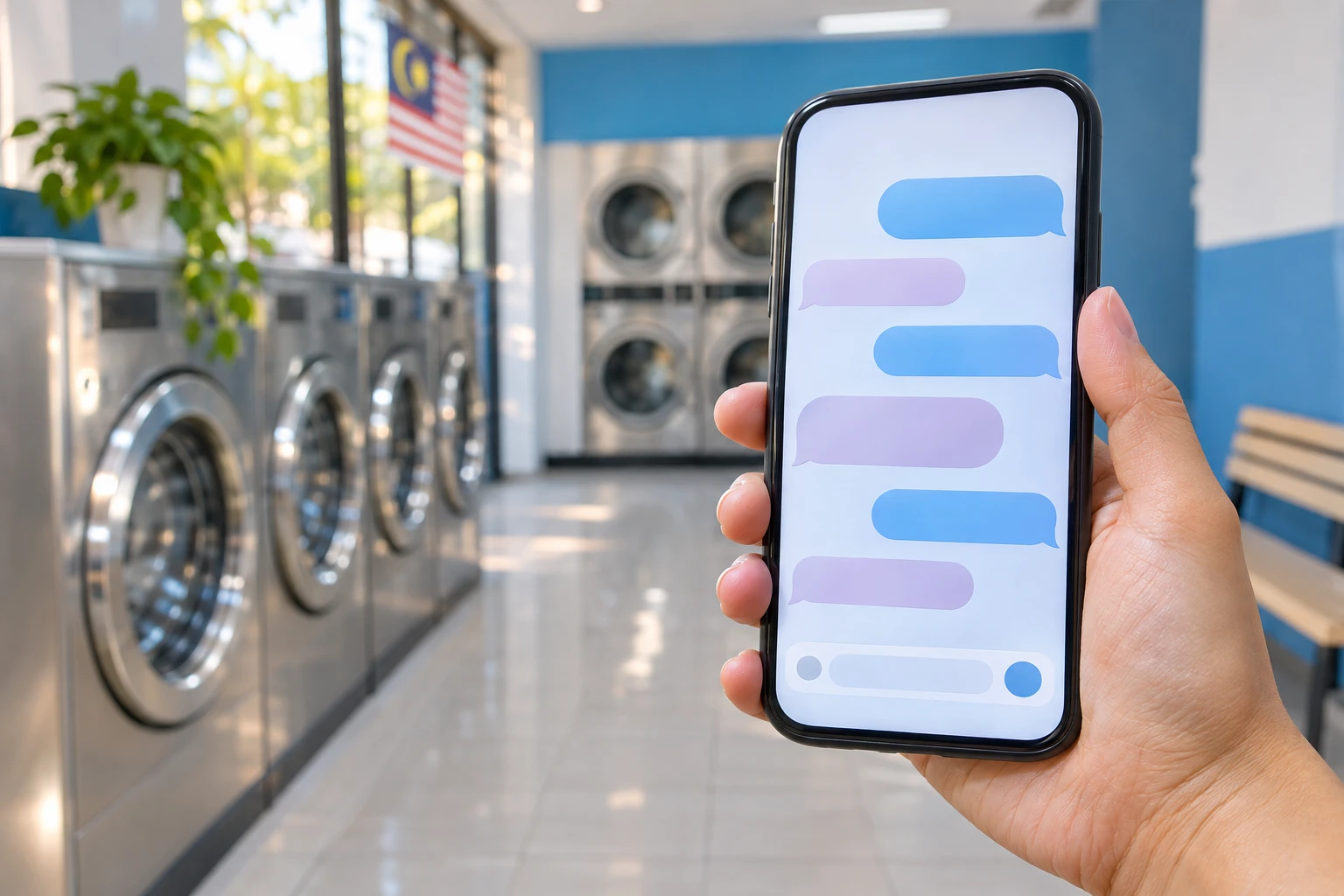
WhatsApp script:
“Hi, sorry about that, and thank you for letting us know. Which machine number was it, and roughly what time? I’m arranging a refund for the cycle right now, and you’re welcome to use any other free machine at no charge. I’ll get the faulty one checked today.”
In-person script:
“I’m really sorry, that’s not the experience we want you to have. Let’s get your clothes into another machine, and I’ll make sure the cycle is refunded.”
Behind the scenes: Put an out-of-order sign on the machine, log the number and symptom, and arrange a repair. If you need a technician, send the outlet location, the machine model or serial number (a photo works), what the issue is and when it began, and any error code shown.
Complaint 2: Clothes Damaged
This one is touchy, because the stakes are higher for the customer. It might be a shrunken top, a snagged shirt or a colour run.
Be careful not to promise compensation or blame the customer in the first message. First find out what actually happened.
WhatsApp script:
“Hi, I’m sorry to hear that. Could you tell me which machine you used, the time, and send a photo of the item if you can? I’d like to look into this properly and get back to you today.”
What to check: Look at whether the machine had a fault, whether the cycle was an unusual one, and whether the load was sorted properly. If a machine fault is clear, a fair resolution matters. If it looks like a care-label issue, say so gently and offer a goodwill gesture rather than an argument.
In-person script:
“I’m sorry, that’s frustrating. Can I take a look and note down the details? I want to find out what happened.”
Complaint 3: Payment Taken but Machine Didn’t Start
This one is nearly always about the payment system, and it’s where customers get angriest because their money is involved.
WhatsApp script:
“Thanks for flagging this, and sorry about the trouble. Could you send a screenshot of the payment and tell me the machine number? I’ll check on my side and either start the machine remotely or refund you today.”
Tips that help:
-
Keep a clear way for customers to send a payment screenshot.
-
Check your payment records before replying so you can confirm quickly.
-
Reply with a deadline, such as “today”, not a vague “soon”.
How often this happens depends partly on your setup. If you’re deciding between systems, this breakdown of coin versus app payment for laundromats is worth reading, because the payment method shapes both the type of complaint and how easy it is to prove what happened. Cashless options like QR payments and e-wallets also leave a cleaner record than coins.
Complaint 4: Lost Item
Socks, a towel, a phone charger left behind. People get anxious about this, and some will accuse other customers or you.
WhatsApp script:
“Hi, sorry to hear that. Could you tell me roughly when you were here, which machine you used and what the item looks like? I’ll check the shop and get back to you today.”
Handle with care: If you plan to check camera footage, remember that footage and customer details fall under data protection rules. The article on PDPA rules for laundromat apps, CCTV and customer data explains what you can store and share, so you don’t create a second problem while solving the first. Never post a customer’s details or footage publicly.
Keep a small lost-and-found shelf with a note about how long items are held, and put the policy on a sign.
Build a Simple Refund Policy
A clear policy saves you from deciding everything on the spot. Here’s a structure you can adapt, with no figures included because every shop is different.
|
Situation |
Suggested Response |
|---|---|
|
Machine failed mid-cycle |
Refund the cycle and offer a free replacement cycle on another machine |
|
Payment taken, machine didn’t start |
Start the machine remotely or refund after confirming the payment |
|
Poor result, such as damp clothes |
Offer a free re-dry or a refund of that cycle |
|
Damaged clothes, fault confirmed |
Review case by case and respond in writing |
|
Lost item |
Search and keep it for a set time, with no liability promised |
Post a short version of this near the entrance and in your app or chat profile, so customers know what to expect. Decide ahead of time who can approve a refund and up to what amount, so you aren’t making it up each time.
How to Reply to a Google Review After a Complaint
Many unhappy customers vent on Google instead of messaging you. Your public reply is read by future customers, not just the writer.
Do:
-
Reply within a day or two.
-
Thank them and apologise for the specific problem.
-
Say what you’ve done or will do.
-
Invite them to message you directly.
Don’t:
-
Argue or blame the customer.
-
Copy and paste the same reply every time.
-
Share personal details.
Sample reply:
“Thank you for telling us, and we’re sorry the machine stopped during your wash. We’ve arranged for it to be checked and would love to make this right. Please message us on WhatsApp with the machine number and time, and we’ll sort out a refund.”
When the customer later updates their review, say thanks and leave it there. For help keeping your profile active and encouraging happy customers to post, marketing ideas for your laundromat business are worth a read, since a steady stream of good reviews softens the effect of the occasional bad one. The setup team also mentions Google Business Profile basics as part of launch support.
When to Escalate
Not every complaint belongs to the person answering the phone. Escalate when:
-
The same machine has failed more than once.
-
A complaint involves possible injury, fire risk, flooding or electrical issues.
-
A customer threatens legal action or contacts the authorities.
-
A damage claim involves a large or sentimental item.
-
You spot a pattern, such as repeated payment failures on one kiosk.
For machine problems, this is where a technician earns their keep. Launch Laundry’s team recommends a root-cause approach, fixing the real issue and not just the symptom, and a commercial laundry machine maintenance and repair service helps prevent the repeat failures that create most complaints in the first place.
Prevention Beats Apology
The best complaint is the one that never happens. A few habits help:
-
Follow a regular preventive maintenance schedule. Launch Laundry says most outlets benefit from servicing every 4 to 12 weeks.
-
Use remote monitoring where you can, since the team lists IoT monitoring as a way to reduce downtime and keep cycle counts up.
-
Put clear instructions on the wall and kiosk so first-timers don’t get stuck.
-
Keep a visible phone number or QR link for help.
-
Review your complaint log monthly and fix the top problem.
Getting the shop design right from the start also helps. Customer flow and clear zones reduce confusion, and the laundromat setup and installation team checks layout, venting and testing before opening day so small faults don’t become early complaints.
Frequently Asked Questions
1. What should I do first when a customer complains?
Reply quickly and acknowledge the problem. Then fix the immediate issue, make it right and follow up.
2. How do I handle a customer who paid but the machine didn’t start?
Ask for a payment screenshot and the machine number, check your records, then start the machine remotely or refund the payment the same day.
3. Should I always refund a failed cycle?
For a clear machine fault, a refund or free replacement cycle is the fairest approach. Decide your policy in advance so every case is treated the same way.
4. What if a customer says their clothes were damaged?
Ask for details and photos, check the machine and cycle used, and respond fairly in writing. Avoid promising compensation until you’ve looked into it.
5. How should I reply to a bad Google review?
Respond politely and quickly, apologise for the specific issue, say what you’re doing about it and invite them to message you directly.
6. Can I check CCTV footage for a lost item?
Possibly, but footage is customer data and falls under PDPA rules. Handle it carefully and never share it publicly.
7. How can I reduce complaints in the first place?
Keep machines on a regular preventive maintenance schedule, use clear signage, offer easy support contact options and review complaints monthly.
8. When should I call a technician instead of just refunding?
If a machine fails repeatedly or shows errors, leaks or unusual noise, book a proper diagnosis so the fault is fixed at the source.
Turn Complaints Into Trust
Complaints are uncomfortable, but they’re also free feedback from people who still care enough to speak up. Reply fast, fix the problem, make it right and learn from it. Do that consistently and your shop earns a reputation for treating people well, which is hard for a nearby competitor to copy.
If you’d like help setting up the systems behind that, from machine reliability to payment flow and workflow design, the team can walk you through it. You can talk to the team about your laundromat operations and get practical advice for your own shop.