Self-service laundries are simple businesses at the counter. A customer pays a machine, the drum turns, and they leave without asking for a receipt. That simplicity is why Malaysia's e-Invoice rollout catches many operators off guard, because a coin or card laundromat issues very few invoices.
This guide explains how LHDN e-Invoice for laundromats works in practice, which operators are affected, and what to check before your phase begins.
Disclaimer: This article provides general guidance only and does not constitute tax advice. Confirm your own position with LHDN or a qualified tax professional. Last checked: September 2026. LHDN rules and exemption thresholds may be updated. Always confirm the current requirements at https://www.hasil.gov.my/ or with a tax professional.
What the e-Invoice System Is
The Inland Revenue Board of Malaysia, LHDN, is moving businesses to electronic invoicing through its MyInvois system. Instead of a paper or PDF invoice that only the buyer sees, each transaction is validated by LHDN and receives a unique identifier.
The Current Implementation Timeline
The e-Invoice rollout is phased by annual turnover:
- Phase 1 (from 1 August 2024): Taxpayers with annual turnover above RM100 million
- Phase 2 (from 1 January 2025): Taxpayers with annual turnover above RM25 million
- Phase 3 (from 1 July 2025): All other taxpayers, including SMEs and self-employed operators
Self-service laundromats are typically classified under the general SME category and fall within Phase 3, meaning compliance should have been in place from 1 July 2025 for most operators.
However, taxpayers with annual revenue or sales below RM150,000 may apply for a conditional exemption under specific categories. This means not all laundromat operators are immediately required to comply. Check the current LHDN guidelines at https://www.hasil.gov.my/ for the applicable threshold and conditions for your business.
To put this in practical terms:
- A single-outlet laundromat with RM200,000 annual revenue falls under Phase 3 and should have implemented e-Invoice from July 2025.
- A micro-operator with RM100,000 annual revenue may fall within the conditional exemption category and should confirm their status directly with LHDN before assuming they are exempt.
Multi-outlet operators need care. If your outlets sit under one company, the combined turnover decides the phase. Separate companies are assessed separately, though LHDN looks at substance, not just structure. For context on how laundromat businesses in Malaysia are commonly structured, see this overview of laundromat business consultancy.
How Walk-In Machine Sales Are Handled
Here is the part that matters most for a self-service laundry. You do not need to issue an e-invoice to every customer who pays RM5 into a washer. LHDN allows businesses selling to walk-in consumers to issue a consolidated e-invoice, which groups all such sales for a period into one submission.
For a laundromat, the usual practice is a consolidated e-invoice for machine sales each month, submitted within the window LHDN sets after month end. Your payment system, whether coin, card or app, must produce a clean total for the period. Detergent vending, drop-off wash and fold and retail items can be consolidated the same way if they are consumer sales.
Keep the supporting records. If LHDN queries a consolidated figure, you will need the machine reports or gateway statements behind it.
When You Must Issue Individual e-Invoices
Some customers will ask for a proper e-invoice, and you must be able to provide one. Business customers such as hotels, hostels, gyms, clinics and restaurants that send laundry to you regularly will want individual e-invoices so they can claim the expense. Any customer, even an individual, can request one and you are expected to issue it with their tax identification details.
Set up a simple process for this before your phase starts. Decide who at the store or office issues the e-invoice, how you collect the buyer's TIN and registration number, and how quickly you turn it around.
Preparing Your Systems
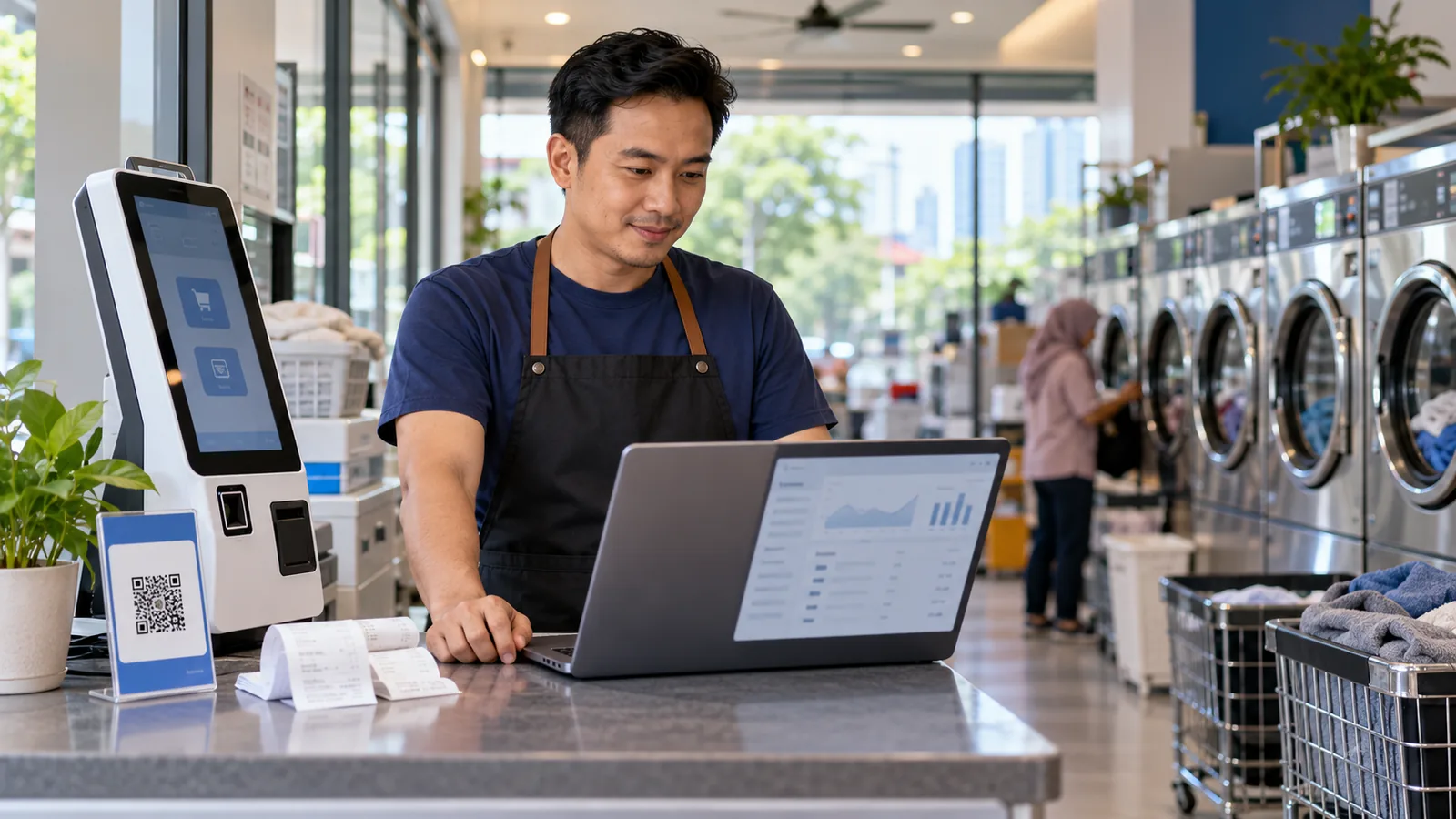
Most laundromats do not need expensive software. The MyInvois portal supports manual entry, which works for a single store issuing a handful of e-invoices per month. Operators with several outlets or steady B2B customers usually move to accounting software that integrates with LHDN, typically for a modest monthly subscription.
Whatever you choose, make sure your payment platform can export monthly totals, your company details on MyInvois are correct, and your accountant knows which outlets and revenue streams belong to which entity.
The businesses that struggle with e-Invoice for laundromats are the ones that leave it until the month their phase starts. Launch Laundry provides finance advisory for laundry startups across Malaysia, helping new and existing operators structure their books, choose payment systems that produce e-Invoice ready reports, and plan for compliance costs alongside equipment financing. For an overview of starting costs and financial planning, see this guide on the finance advisory for laundromats.
Frequently Asked Questions
Do I need to issue an e-invoice for every wash?
No. Walk-in consumer sales can be grouped into a consolidated e-invoice, typically submitted monthly, unless a customer specifically requests an individual one.
When does e-Invoice for laundromats apply to my business?
For most operators, Phase 3 applied from 1 July 2025. If your annual revenue is below RM150,000, a conditional exemption may apply. Confirm your status directly with LHDN at https://www.hasil.gov.my/ before assuming you are exempt.
What if my laundromat is a very small business?
Operators with annual revenue below RM150,000 may be eligible for a conditional exemption, but the conditions and thresholds can change. Confirm your current status with LHDN or a qualified tax professional.