Lint is the most overlooked fire hazard in a laundromat. Dryer fires are not rare events in commercial laundry operations, and in Malaysia, Bomba has specific requirements for commercial premises that laundromat operators must meet. If you are opening or running an outlet, understanding where lint accumulates and what compliance looks like is not optional.
Why Lint Is a Serious Fire Risk
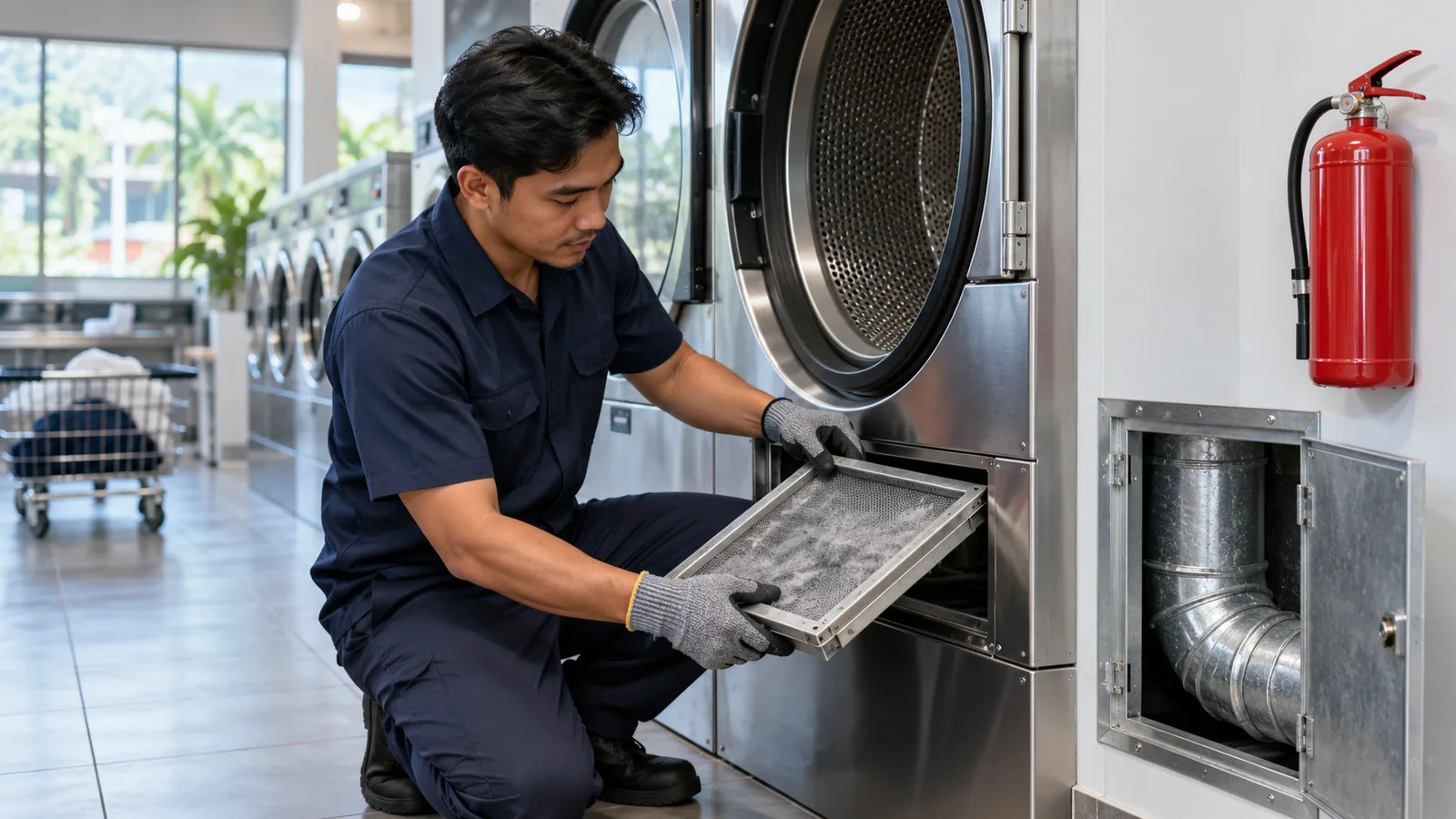
Lint is highly flammable. It collects in three main areas inside a commercial dryer setup: the lint trap, the exhaust ducting, and the space behind and around the drum. When lint builds up in ducting, the dryer has to work harder to push hot air through. The combination of restricted airflow, elevated heat, and a large volume of dry, fine fibres creates conditions where a fire can start and spread quickly.
In a commercial laundromat running multiple dryers through dozens of cycles a day, lint accumulates much faster than in a residential machine. Most operators underestimate how quickly ducting becomes a problem.
Bomba Malaysia Requirements for Commercial Laundromats
Under Malaysian fire safety regulations, commercial premises including laundromats are required to meet several baseline standards from Bomba (Jabatan Bomba dan Penyelamat Malaysia):
- APAR placement: Alat Pemadam Api Ringan (fire extinguishers) must be placed at accessible locations throughout the premises, with signage clearly marking each one
- Fire detection: Smoke detectors or heat detectors are required in commercial spaces
- Clear evacuation routes: Exits must be unobstructed and marked with illuminated signage
- Annual inspection: Commercial premises must undergo periodic fire safety inspections, and operators should keep records of compliance
- Electrical compliance: All electrical installations must meet Suruhanjaya Tenaga standards, which intersects with dryer wiring and ducting specifications
When applying for your business licence or renewing it, Bomba compliance is part of the local authority review. Failing an inspection can result in notices or delays to operations.
Recommended Lint Cleaning Schedule
A structured cleaning schedule is the most practical way to stay safe and compliant.
Daily or after every cycle:
- Clear the lint trap fully before or after each load
- A blocked lint trap is the most common cause of dryer overheating
Every 3 to 6 months:
- Inspect and clean exhaust ducting from the dryer to the external vent
- Use a flexible brush kit to remove lint from inside the duct run
- Check the external vent cover to ensure flaps open freely and are not clogged
Annually:
- Arrange a professional deep clean of the ducting system
- This should include behind the drum and the internal fan housing
- Combine this with your Bomba inspection preparation
Signs That Your Ducting Is Blocked
Do not wait for a scheduled clean if you notice any of the following:
- Dryers taking longer than usual to dry a load: restricted airflow means less heat exchange
- Clothes still damp after a full cycle: a sign the hot air is not circulating properly
- The machine or the area around it feels hotter than normal: heat that cannot escape through the duct accumulates in the machine
- A burning smell during operation: this is a warning sign that requires immediate investigation, not a wait-and-see
Any of these symptoms means ducting should be checked before the machines continue running.
Choosing Equipment With Accessible Lint Systems
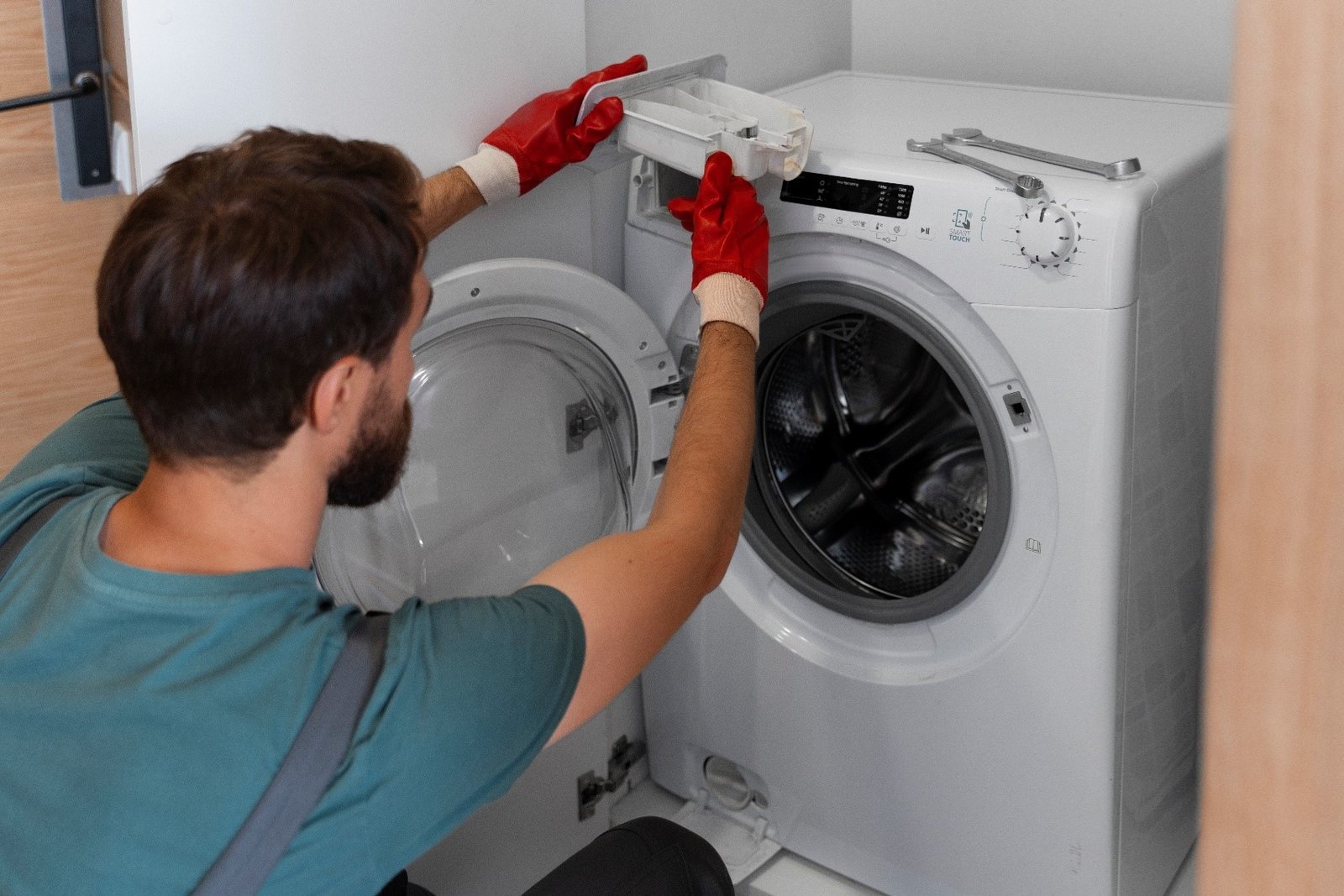
Not all commercial dryers are built the same way when it comes to lint access. Machines with front-facing lint traps that open easily, combined with straight or short duct runs to external vents, are far easier to maintain than machines that require tools or partial disassembly to access the lint path.
When selecting equipment, ask specifically about lint trap accessibility and the recommended ducting configuration. Ventilation design at the time of setup matters as much as the machine itself. Operators who work with commercial laundry equipment suppliers who understand local installation requirements are in a better position from day one.
Operator Fire Safety Compliance Checklist
Use this checklist to assess your current outlet:
- [ ] Lint trap cleaned daily or after each cycle
- [ ] Ducting inspected and cleaned every 3 to 6 months
- [ ] Professional deep clean completed annually
- [ ] APAR units in place and within service date
- [ ] Smoke or heat detectors installed and tested
- [ ] Evacuation route clear and signage visible
- [ ] Bomba inspection records kept on file
- [ ] Electrical installation certified
If you are setting up a new outlet, laundromat setup services that include proper ducting layout and ventilation planning help you avoid retrofitting these systems later, which is both more costly and more disruptive.
---
Frequently Asked Questions
How often should a commercial laundromat dryer duct be cleaned?
Ducting should be inspected every 3 to 6 months depending on how busy the outlet is. A high-volume outlet running 10 or more dryers daily should clean ducting closer to every 3 months. An annual professional deep clean is recommended for all outlets regardless of volume.
Does Bomba inspect laundromats specifically?
Bomba inspects commercial premises in general. Laundromats fall under this category. The inspection covers fire extinguisher placement and condition, fire detection systems, evacuation routes, and electrical safety. Operating without passing inspection can affect your business licence.
What is the first thing to check if a dryer is running hot or taking longer to dry?
Check the lint trap first. If it is clean, the problem is likely in the ducting. Blocked ducting is the most common cause of overheating and extended drying times in commercial machines.
Can I do the ducting clean myself or do I need a professional?
Routine lint trap cleaning and basic duct brushing can be done by the operator. For deep cleaning behind the drum and through long duct runs, a professional service with the right equipment will do a more thorough job and can identify damage or blockages that are not visible from the access points.