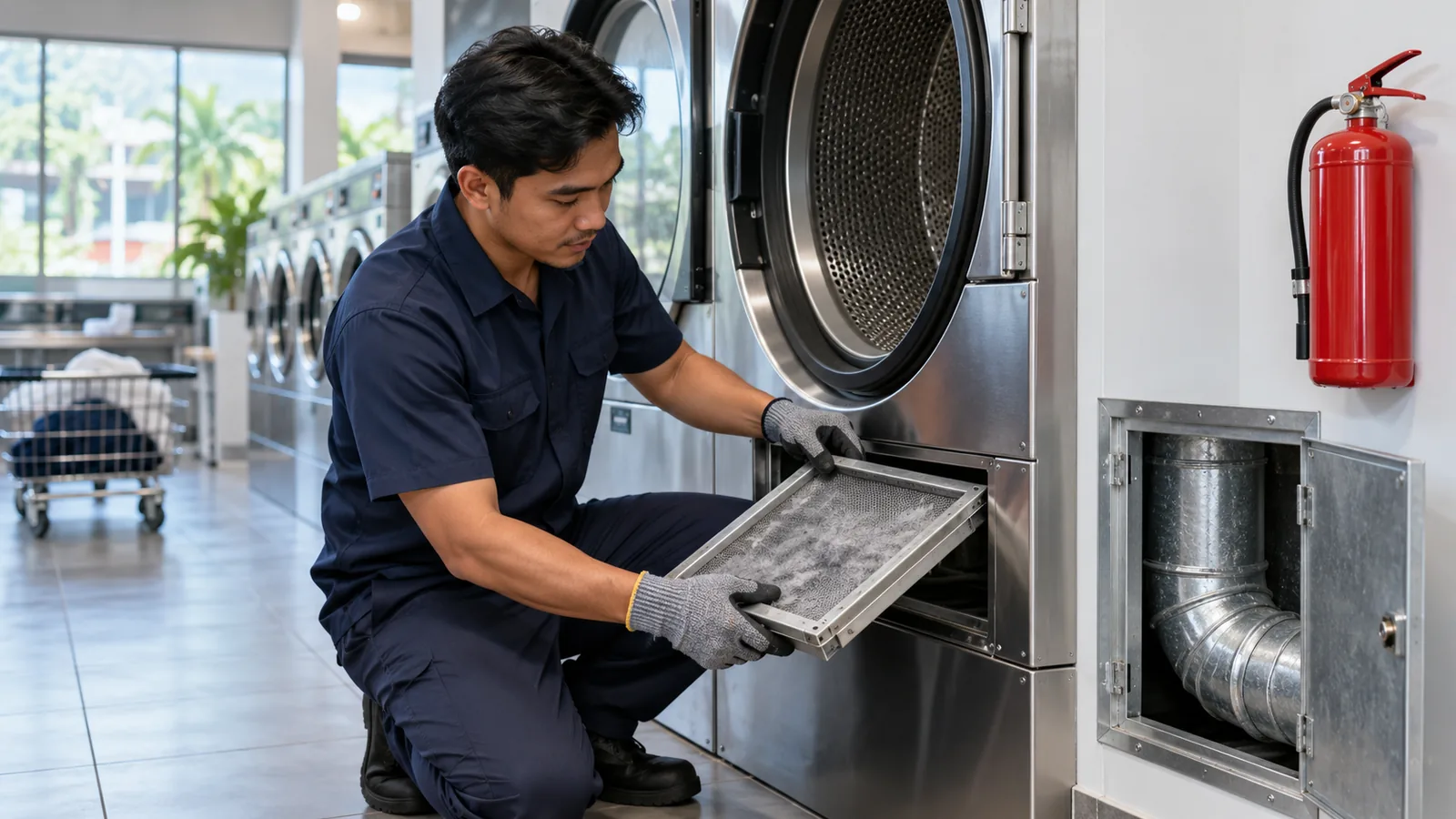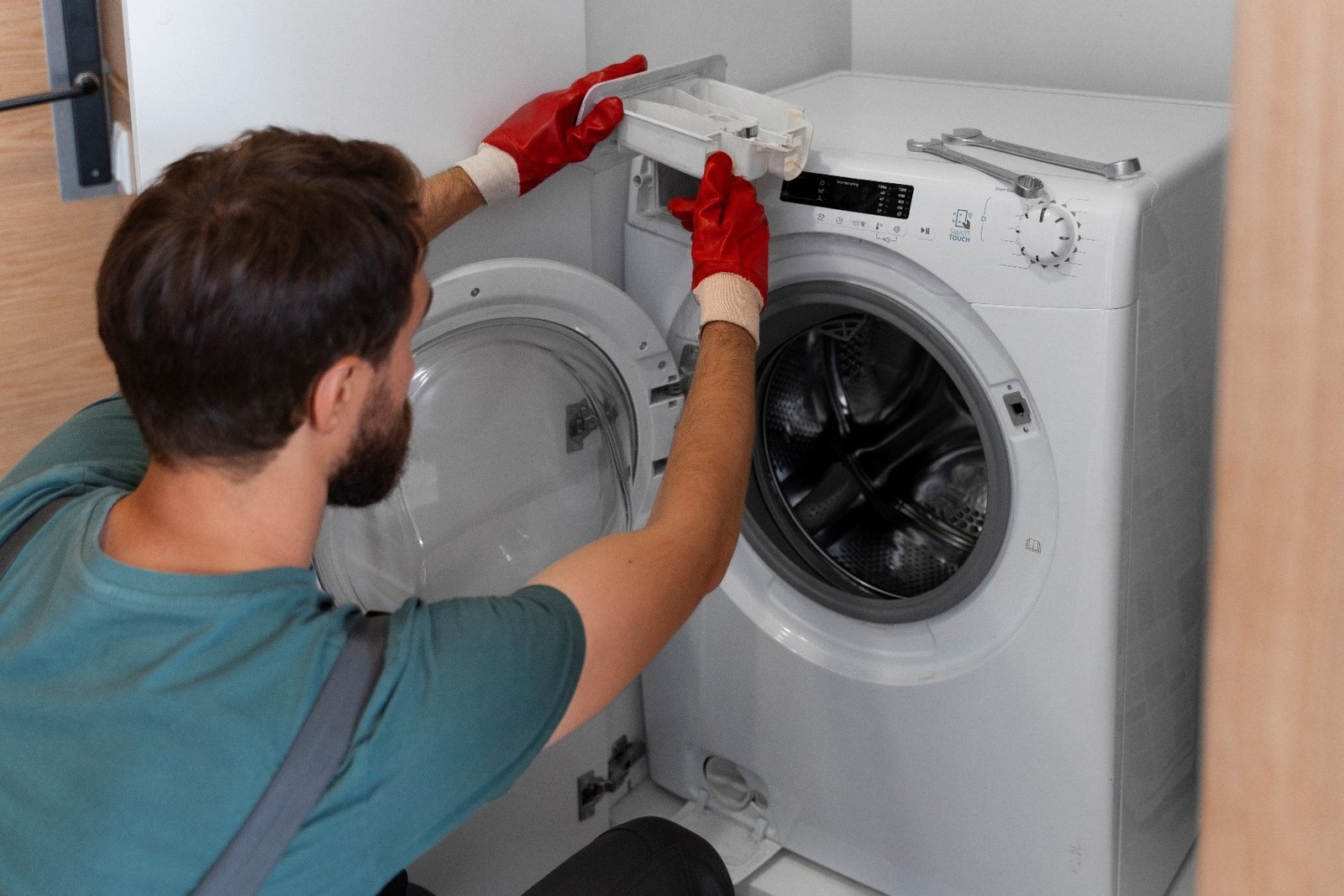
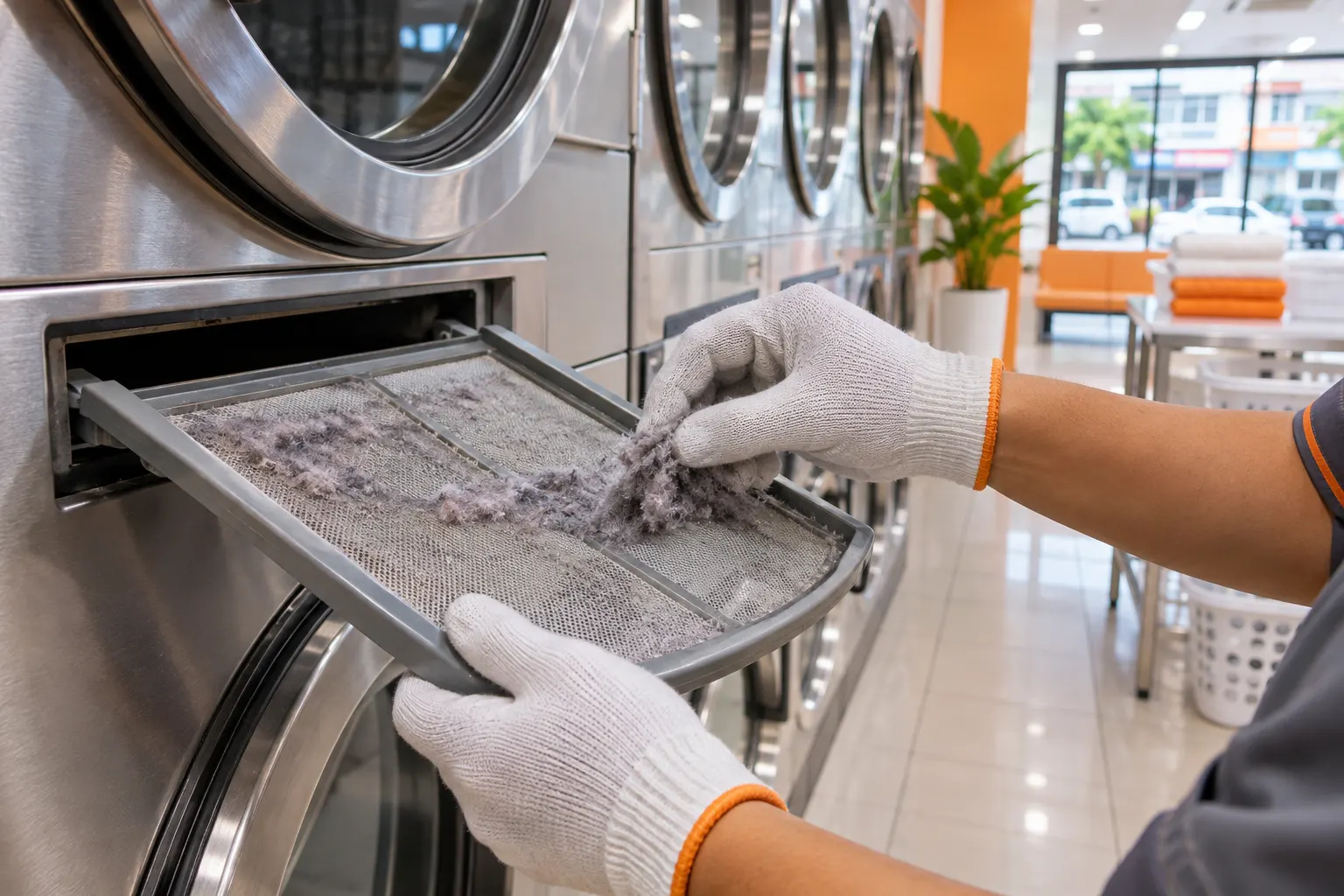
A dryer that takes twice as long to dry a load doesn’t look broken. It still spins, it still makes heat, and customers still pay. But every extra minute it runs costs you power, ties up the machine and sends people home with damp clothes and a bad impression.
Launch Laundry’s maintenance team says complaints like “the dryer takes too long” are a signal that maintenance has become urgent, not just helpful. The good news is that most dryer trouble builds up slowly, which means a simple routine can catch it early. This is a practical checklist you can print, tape inside a cupboard and tick off.
Why Dryers Need a Routine, Not Just Repairs
Most machine failures don’t happen suddenly. According to the service team, they build up over time through lint accumulation, worn belts, loose components, airflow restrictions, poor levelling, neglected filters and small leaks that grow into big ones.
For dryers, airflow is the big one. Anything that blocks the path of air makes the machine work harder for a worse result. A steady routine does three things for you:
-
It prevents expensive downtime during peak hours.
-
It extends machine lifespan and pushes back replacement costs.
-
It improves performance, with faster cycles and better drying.
If you want the full story on why lint is dangerous, the piece on dryer lint fire prevention and Bomba requirements for Malaysian laundromats covers the fire side in detail. This checklist is about the everyday habits that keep you out of that situation in the first place.
How Often Should You Service Commercial Dryers?
Launch Laundry’s own guidance is that most outlets benefit from professional servicing every 4 to 12 weeks, depending on daily cycles, machine age and customer load. Busy, high-volume shops usually need checks more often.
The routine below sits around that. Think of it as the tasks you or your attendant handle between technician visits.
The Maintenance Checklist at a Glance
|
Frequency |
Task |
Who Usually Does It |
|---|---|---|
|
Daily |
Wipe down drums, doors and the outside of machines |
Owner or attendant |
|
Daily |
Listen for unusual noise or shaking while machines run |
Owner or attendant |
|
Weekly |
Clean the lint filter or trap and check the area around it |
Owner or attendant |
|
Weekly |
Check for leaks near connectors, floors and door seals |
Owner or attendant |
|
Monthly |
Inspect belts, door locks and visible wear points |
Owner or technician |
|
Monthly |
Check heating performance and drying time |
Owner or technician |
|
Quarterly |
Clean lint pathways and ducts, check airflow |
Technician recommended |
|
Annual |
Full engineer service and performance review |
Technician |
These intervals are a sensible starting point, not a rule. If your shop runs flat out all day, tighten them. If it’s quiet, you may stretch some of them slightly, though the lint tasks are worth keeping frequent either way.
Daily Tasks: Two Minutes That Save You Money
Daily jobs should be quick enough that nobody skips them.
Wipe down the machines. A quick wipe over the drum rim, door and exterior keeps the shop looking cared for and helps you spot problems. A door that doesn’t close properly is far easier to notice on a clean machine.
Use your ears. Walk past while dryers are running and listen. The service team lists vibration, imbalance, unusual noise and overheating signs as things to catch early. A new rattle today is a repair bill next month if you ignore it.
Look at the floor. Water, lint drifts or anything odd around the machines tells you something has changed.
Weekly Tasks: Lint and Leaks
Check and clean the lint filter or trap. Neglected filters are one of the causes the service page lists for breakdowns, and lint left to pile up restricts airflow. Clear it, look at the surrounding space, and note anything unusual.
Scan for leaks. Look around hoses, connectors and door seals. The team treats minor leaks as something that can turn into a major failure, so a small drip is worth fixing early rather than watching.
Test one cycle yourself. Run a normal load and watch how long it takes. If drying times are creeping up, you’ll know before customers complain.
Monthly Tasks: Belts, Doors and Heating
Monthly is where you move from cleaning to inspecting.
-
Belts and wear points. Worn belts appear on the list of slow-building problems, so give visible wear points a proper look. If you’re not comfortable opening panels, leave this to a technician.
-
Door seals and locks. A door that doesn’t seal or lock reliably affects both performance and safety.
-
Mechanical alignment. The service team checks door seals, locks and basic mechanical alignment during preventive visits, so these are sensible things to eyeball yourself.
-
Heating behaviour. Check that dryers heat properly and consistently. Dryers that don’t heat, heat unevenly or take too long are all symptoms the team handles regularly.
-
Levelling. Poor levelling is on the list of causes of vibration and wear. If a machine looks like it’s rocking, note it.
Keep a simple log with the date, machine number and what you found. Notes like “Dryer 3 slower than usual” are gold when a technician arrives.
Quarterly Tasks: Ducts and Airflow
Every three months, step back and look at the whole airflow path.
-
Clean lint pathways. The preventive checklist from the service team includes airflow and lint pathway checks for dryers, which it flags as a common cause of poor drying.
-
Check venting routes. Make sure nothing is blocking, crushing or disconnecting the route air takes out of the building.
-
Compare drying times. Run a standard load and compare it to your earlier notes. A slow trend is usually airflow.
-
Tighten and clean. Basic cleaning and tightening of accessible parts is part of a typical preventive visit.
Because duct cleaning can be fiddly and tied to fire safety, many owners book this one with a technician. If you want the work done properly without guessing, that’s where professional preventive maintenance for commercial laundry machines helps. After each visit you get a summary of what was checked, what was found, what was done and what to watch over the next few days.
Annual Tasks: Full Engineer Service
Once a year, bring in an engineer for a full review of every dryer. This is the point to ask about parts that are close to the end of their life, compare performance across machines and decide whether any should be replaced rather than repaired again.
If your shop is very busy, you may fold this into a regular plan. Launch Laundry offers three maintenance plans based on usage:
|
Plan |
Best For |
What It Includes |
|---|---|---|
|
Essential |
Smaller outlets |
Scheduled preventive visits, routine inspection, service summary |
|
Growth |
Busy laundromats |
More frequent visits, priority scheduling, preventive recommendations |
|
High-Volume |
Commercial and peak-hour operations |
Full preventive schedule, priority troubleshooting, airflow and load guidance, parts planning |
Know When It’s a Breakdown, Not Maintenance
Some problems shouldn’t wait for the next checklist date. The service team lists these common dryer symptoms:
-
Not heating, heating inconsistently or taking too long
-
Error codes, repeated resets or unexpected shutdowns
-
Noisy operation or a performance drop over time
-
Leaks around door seals or hoses
When one of these appears, stop the machine, put up an out-of-order sign and arrange a proper diagnosis. A quick patch rarely lasts. To get a visit booked faster, the team asks you to send your outlet location, the machine model or serial number (a photo is fine), the issue and when it started, plus any error code on the display.
Keep the Right Spare Parts on Hand
Many owners lose days because they don’t have the right part and try something that doesn’t quite fit. The service team can help you build a short list of critical spare parts so you aren’t stuck waiting when a high-failure part gives out.
If you already know what you need, you can browse genuine coin laundry machine spare parts available in Malaysia and match them to your machines. Launch Laundry supplies spare parts for commercial brands including Speed Queen, and its team can guide you on picking the correct part.
Make It Easy for Your Team to Follow
A checklist only works if people use it.
-
Print the table and stick it somewhere visible.
-
Assign each task to a person by name.
-
Keep a simple notebook or shared phone note for findings.
-
Review the log monthly and look for repeat problems.
-
Book the next technician visit before the last one fades from memory.
If you’re still planning your outlet, it’s worth thinking about maintenance access during layout design. Machines placed too close together or dryers that don’t vent efficiently are exactly the kind of mistakes the team flags during laundromat setup and installation, where site checks cover ventilation and airflow routes before machines arrive.
Frequently Asked Questions
1. How often should commercial dryers be serviced?
Launch Laundry says most outlets benefit from servicing every 4 to 12 weeks, depending on daily cycles, machine age and customer load. High-volume shops usually need more frequent checks.
2. What are the most common causes of dryer breakdowns?
Slow build-ups like lint accumulation, worn belts, loose components, airflow restrictions, poor levelling, neglected filters and small leaks.
3. Why is my commercial dryer taking so long to dry?
Airflow problems and lint buildup are common causes. A technician can check the lint pathways, venting and heating performance to find the real reason.
4. What does a preventive maintenance visit include?
Typical checks cover wear points, vibration and overheating signs, dryer airflow and lint pathways, hoses and connectors, door seals and locks, basic alignment, and some cleaning and tightening. You get a summary afterwards.
5. Can I do any of this maintenance myself?
Daily and weekly tasks like wiping down, lint cleaning and leak checks are easy to handle in-house. Deeper inspection and duct work are better left to a technician.
6. What should I send to book a repair or service visit?
Your outlet location, the machine model or serial number (a photo works), what the issue is and when it began, and any error code shown.
7. Does Launch Laundry service dryers in my area?
Service requests are supported across Kuala Lumpur and Selangor, Johor Bahru, Penang and Melaka, with other locations handled case by case.
8. Can I get help even if I don’t know my machine model?
Yes, the team says it can still help if you don’t know the model, so send what you have.
A Few Minutes a Day Beats a Big Repair Later
Dryers rarely fail without warning. They give hints through slower drying, odd noises and small leaks, and a simple routine makes sure someone actually notices. Do the quick jobs daily, the lint and leak checks weekly, the inspections monthly, the airflow work quarterly and the full service yearly.
If you’d like a technician to take the heavy parts off your plate, you can order genuine spare parts or book a service and get your machines running the way they should.