Prior to deciding on which machines you will purchase or which location would be suitable for opening up your laundry business, there is an even more important question that must be answered: what type of laundry business do you want to operate? Self-service (in which clients wash their clothes themselves) and full-service (in which your employees will perform all the work for the client) are two completely different types of business, despite having similar machinery.
The Core Difference
|
Factor |
Self-Service |
Full-Service |
|
Who does the laundry |
The customer |
Your staff |
|
Staffing needed |
Minimal, sometimes none |
Requires trained staff on-site |
|
Your daily involvement |
Low, mostly maintenance and monitoring |
High, ongoing operational management |
|
Customer type |
DIY-minded, price-conscious customers |
Busy customers wanting convenience |
|
Revenue per customer |
Lower per visit |
Higher per visit |
|
Typical operating hours |
Can run 24 hours with minimal supervision |
Usually tied to staffed hours |
What Self-Service Actually Looks Like
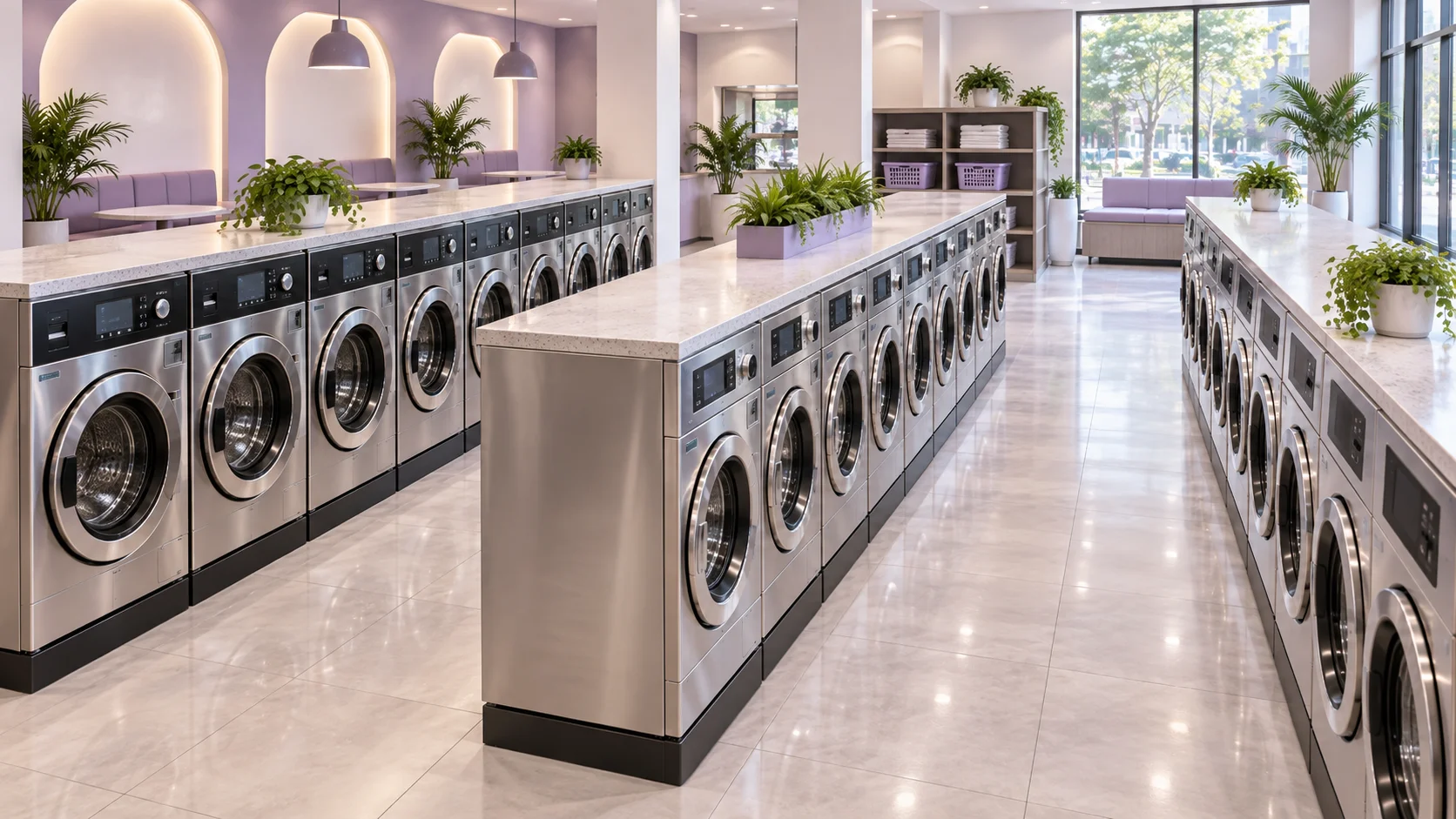
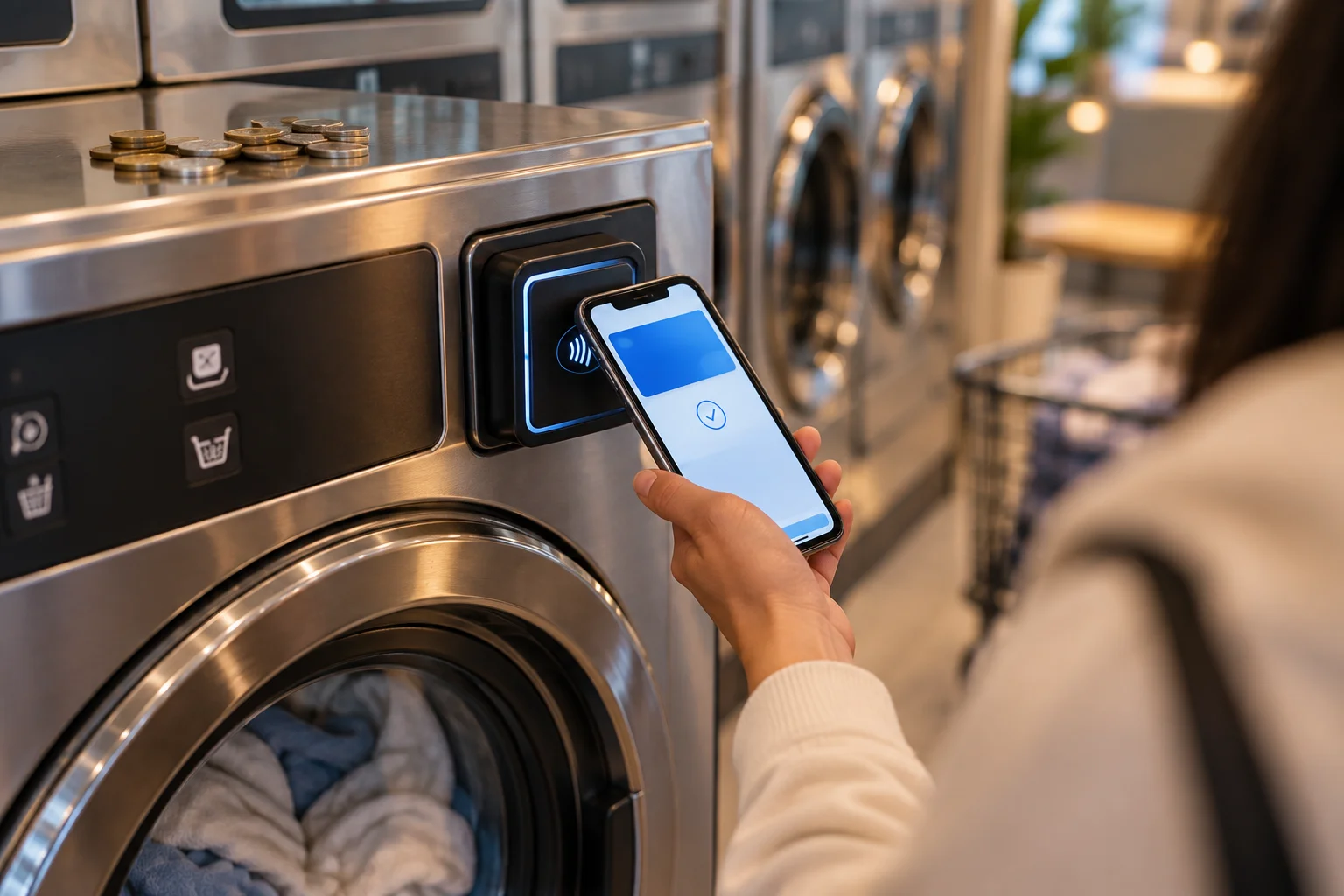
A self-service laundromat is what most people picture when they hear the word "laundromat" — rows of coin or app-operated washers and dryers, where customers come in, load their own clothes, and leave once it's done. Your job as the owner is to keep the machines running, the shop clean, and the payment system working smoothly.
What running a self-service laundromat involves day-to-day:
-
Regular machine maintenance and cleaning
-
Restocking basic supplies if you sell detergent or softener on-site
-
Monitoring payment systems and collecting cash (if coin-operated) or reviewing digital transactions
-
Handling occasional customer questions or machine issues
-
Keeping the shop presentable and safe
Why some owners prefer this model:
-
Lower staffing cost, since you don't need someone washing clothes for every customer
-
Can operate with minimal supervision, sometimes even 24 hours with remote monitoring
-
Simpler to manage if you're running the business alongside another job
-
Easier to scale into multiple outlets, since each shop doesn't need a full staff team
What Full-Service Actually Looks Like
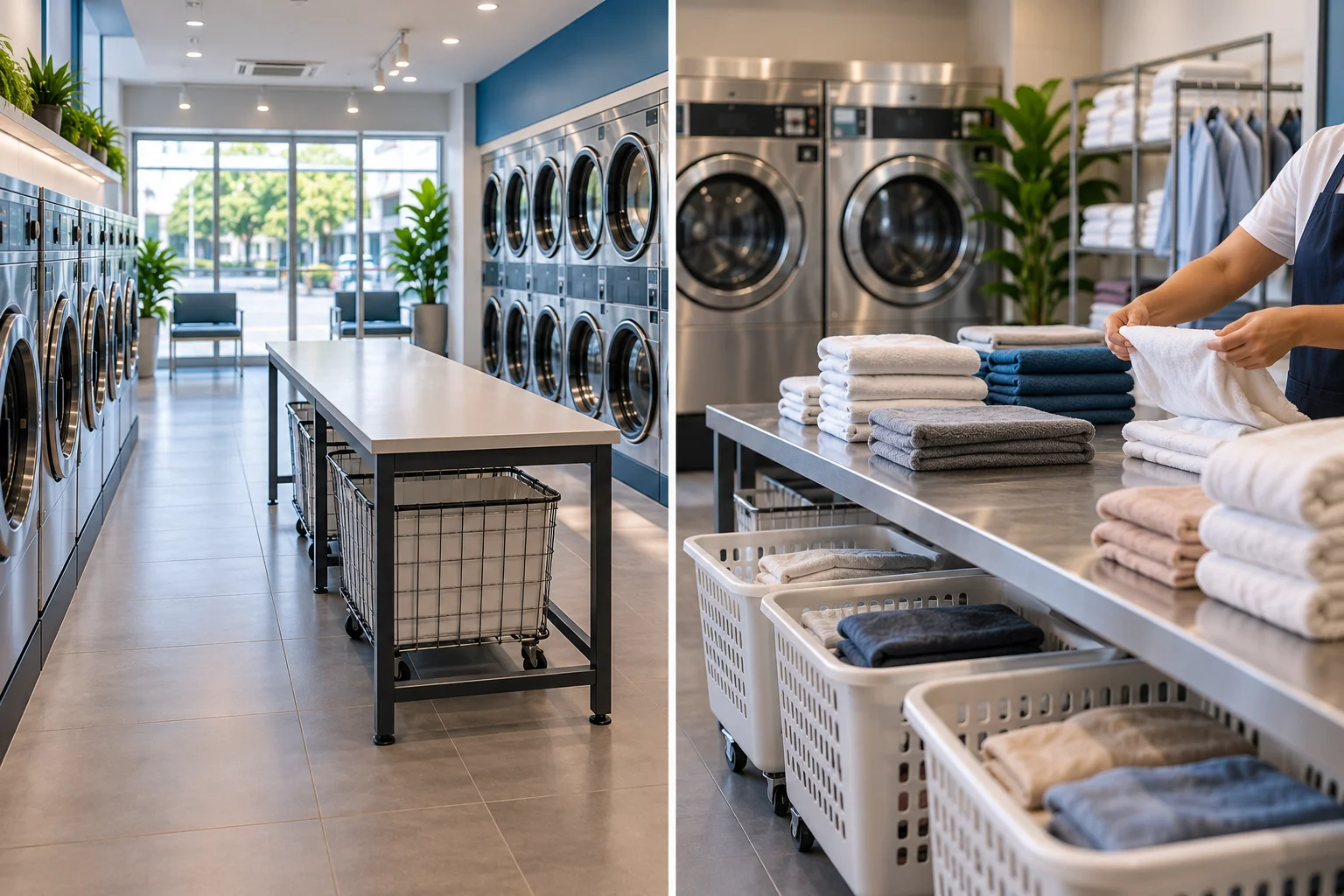
A full-service laundromat (sometimes called a wash-and-fold service) means customers drop off their laundry and your staff handles the entire process - washing, drying, folding, and sometimes even delivery. Customers pay more per visit, but they're paying for convenience, not just machine access.
What running a full-service laundromat involves day-to-day:
-
Hiring and training staff to handle laundry properly and consistently
-
Managing drop-off and pick-up logistics, including labelling and sorting customer items
-
Quality control, since mistakes (lost items, damaged fabric, mixed-up loads) directly affect customer trust
-
Potentially managing delivery logistics if you offer pick-up and drop-off service
-
Higher day-to-day involvement in operations compared to self-service
Why some owners prefer this model:
-
Higher revenue per customer, since you're charging for labour, not just machine time
-
Stronger customer loyalty, since convenience-focused customers tend to return regularly once they trust the service
-
More opportunities to add extra services, like ironing or specialty fabric care, at a premium price
Comparing Capital Requirements
|
Cost Factor |
Self-Service |
Full-Service |
|
Machine investment |
Similar baseline cost |
Similar baseline cost |
|
Staffing cost |
Low to none |
Ongoing, meaningful cost |
|
Training investment |
Minimal |
Higher, staff need proper training |
|
Shop size needs |
Can work with a smaller footprint |
Often needs extra space for sorting and storage |
|
Insurance considerations |
Lower risk profile |
Higher, given liability for handling customer belongings |
Interestingly, the machine investment itself is often quite similar between the two models; the real cost difference comes from staffing, training, and the extra operational complexity that full-service requires.
Comparing Profit Margins
This is where the two models genuinely diverge, and it's worth understanding both sides honestly.
Self-service tends to have:
-
Lower revenue per customer, but also lower ongoing costs
-
More predictable, passive-style income once the shop is running smoothly
-
Margins that depend heavily on machine utilisation how many loads run per day
Full-service tends to have:
-
Higher revenue per customer, but staffing costs eat into that margin
-
Profit that depends on operational efficiency how well you manage staff time and turnaround
-
More room for premium pricing on convenience-focused customers, but also more room for costly mistakes
Neither model is automatically more profitable. A well-run self-service shop with strong foot traffic can outperform a poorly managed full-service shop, and vice versa. It really comes down to execution.
Which Customer Type Are You Targeting?
|
Customer Type |
Better Suited Model |
|
Students and budget-conscious residents |
Self-service |
|
Busy working professionals |
Full-service |
|
Hotels, hospitals, and institutions needing bulk laundry handled |
Full-service |
|
Residents near your shop wanting quick, cheap access anytime |
Self-service |
|
Customers wanting convenience and are less price-sensitive |
Full-service |
Understanding your local area matters a lot here. A shop near a university or dense residential area with younger, price-conscious residents often does well with self-service. A shop in a busier, more affluent urban area, or one targeting hotels and businesses directly, may find more success with full-service.
Can You Combine Both Models?
Absolutely! And indeed there have been many profitable laundromats in Malaysia that practice just this kind of strategy. With a hybrid strategy, the launderette will offer both self-service machines as well as wash and fold services depending on what the customer prefers. This way you will reach out to more customers but won’t have to pay more salaries like in the full service strategy.
A hybrid approach typically means:
-
Standard self-service machines available to walk-in customers
-
A designated drop-off counter or service for wash-and-fold orders
-
Staff scheduled during peak hours to manage the drop-off service, rather than full-time coverage
-
Pricing that reflects both service levels clearly, so customers know what they're paying for
Questions to Ask Before Choosing Your Model
-
How hands-on do I want to be in the daily operations? Self-service requires less daily involvement; full-service requires more.
-
What does my target customer actually want convenience, or a cheap DIY option?
-
Am I comfortable managing staff, or would I rather keep the business as low-maintenance as possible?
-
Does my location suit one model better than the other, based on the type of residents or businesses nearby?
-
Could a hybrid model let me serve both customer types without overcommitting to one approach?
Frequently Asked Questions
1. Which model brings more profit self-service or full service?
None is always more profitable. The self-service model has lower expenses but also generates less profit from each client, while the opposite is true about full service.
2. Do I require staff to operate my self-service laundry?
No, unless you plan on hiring part-time staff to assist you in such matters as cleaning, checking equipment, customer assistance during peak hours.
3. Is it more difficult to run a full-service laundry than a self-service one?
Yes, as it requires additional efforts to train staff, control the quality of services and work with clients' personal property.
4. Can I switch from self-service to full service in the future?
Yes, many owners prefer starting from a self-service model and adding full service by offering the wash-and-fold service later.
5. Which model requires more room in my shop?
The answer depends on whether you prefer a compact shop for self-service and additional room for sorting and processing orders in full-service.
6. Is a hybrid model a good option for new laundromat owners?
It can be, since it lets you serve both price-conscious and convenience-focused customers, though it does require managing both service types properly from day one.
7. Which model suits someone running the business as a side income?
Self-service generally suits this better, since it requires less daily hands-on management compared to full-service, which needs more active oversight.
8. How do I know which model fits my chosen location?
It depends on your local customer base: areas with students or budget-conscious residents often favour self-service, while busier professional or hotel-heavy areas may favour full-service.
Let's Find the Right Model for Your Laundromat
Choosing between self-service, full-service, or a hybrid approach depends on your goals, budget, and location. Book a free consultation with Launch Laundry, and we'll help you figure out which model genuinely fits your situation.