Licensing and Permits Required to Open a Laundromat in Malaysia
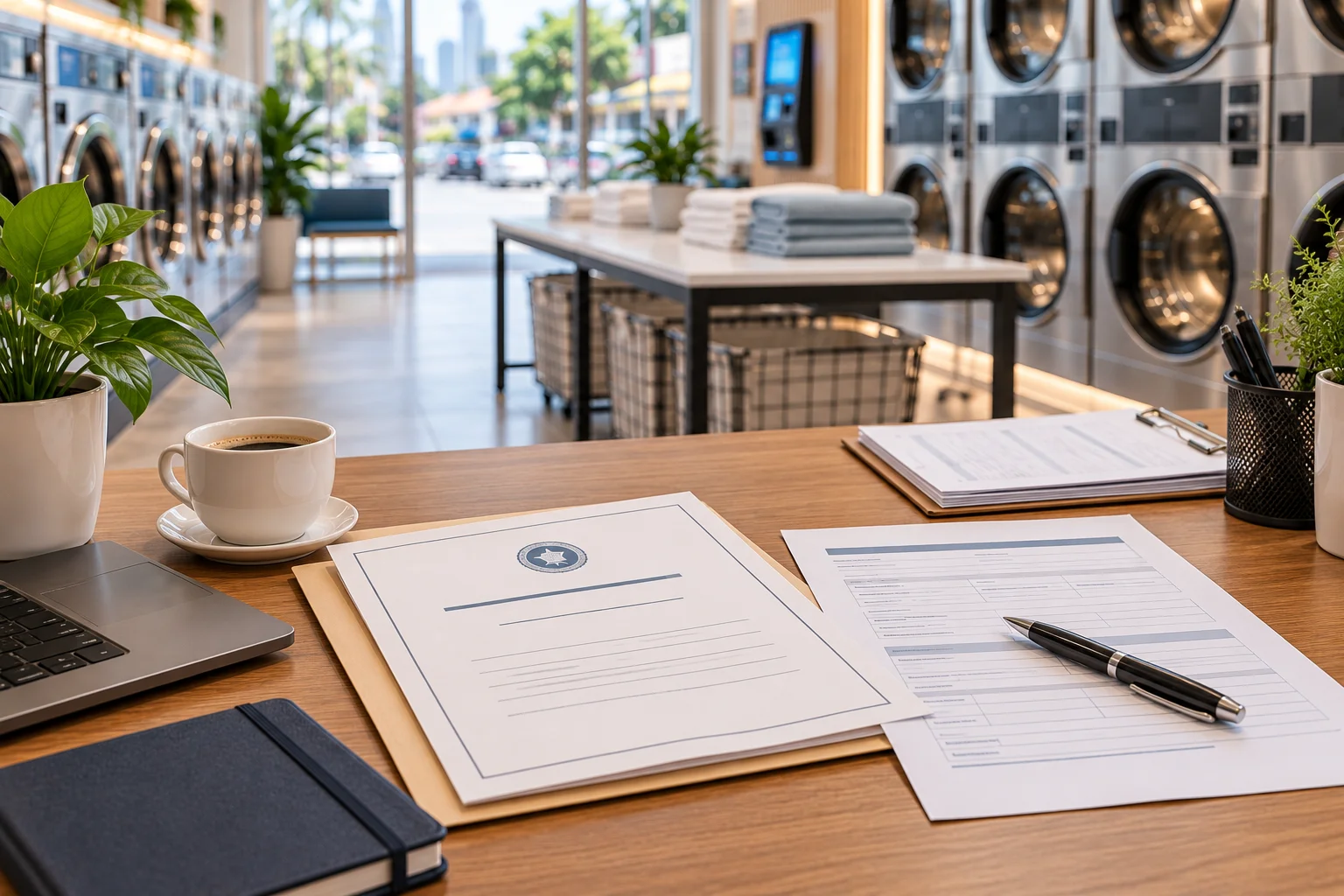
Preparing your equipment and facility is merely the first half of establishing your laundromat; the second half of the more mundane, but equally vital, task of registering and licensing your enterprise cannot be overlooked, or you might be facing trouble such as fines, hold-ups, or even shutdown shortly after your grand opening.
Luckily, obtaining the necessary licenses for your laundromat is not really difficult once you understand what needs to be done. This article explains the process from beginning to end in the order that most owners usually do it.
Why This Step Matters More Than People Think
Too many laundromat owners who are just getting started think only about machines, design, and site selection, while they consider licensing as something that they'll do later. This is not right. There are some licenses that will require you to wait for several weeks before you get them, such as sign and drainage permits. If you don't start thinking about these issues early, your business opening might be delayed.
Step 1: Register Your Business With SSM
Before anything else, your laundromat needs to be a legally registered business. This is done through SSM (Suruhanjaya Syarikat Malaysia), Malaysia's Companies Commission.
|
Business Structure |
What It Means |
|
Sole Proprietorship |
Simplest option, one owner, personally liable for the business |
|
Partnership |
Two or more owners sharing responsibility and liability |
|
Sdn Bhd (Private Limited) |
A separate legal entity, offers liability protection, more paperwork involved |
Which one should you choose? Many first-time laundromat owners start as a sole proprietorship or partnership because it's simpler and cheaper to set up. Owners planning to scale into multiple outlets, or those wanting personal liability protection, often register as a Sdn Bhd instead. It's worth speaking to an accountant or company secretary about which structure fits your specific plans.
Step 2: Apply for Your Local Council Business License
After registering your business with the SSM, you then need to obtain a business premise license from the local city or district council, depending on where your business is located. In Malaysia, it could be the MBPJ, DBKL, MPSJ, MBSA, or any other council that covers your particular region.
What this typically involves:
-
Submitting your SSM registration documents
-
Providing your tenancy agreement or proof of premise ownership
-
Site layout plans showing your machine placement and fire safety access
-
Paying the applicable license fee, which varies by council and shop size
A few things to double-check:
-
Confirm your shop lot's zoning actually permits a laundromat or commercial service business
-
Ask specifically whether a separate fire safety or health-related sign-off is needed as part of the approval
-
Find out the expected processing time, since this varies a lot between councils
Step 3: Sort Out Utility and Water Board Considerations
Laundromats use significantly more water than a typical retail business, and this sometimes triggers additional requirements from your local water authority (like Air Selangor, or the relevant state water provider).
|
Consideration |
Why It Matters |
|
Water supply classification |
Some water providers classify commercial laundry usage differently from standard retail, affecting your billing and approval process |
|
Drainage and greywater discharge |
Councils may require proof that your drainage system properly handles wastewater output |
|
Utility upgrade approvals |
If you need higher water pressure or capacity, this may require a separate application process |
This step often gets overlooked because it's not always framed as a "licensing" step in the traditional sense. But if your utility setup doesn't meet local requirements, it can hold up your final business license approval.
Step 4: Apply for Your Signage Permit
Even something as simple as your shop signboard needs council approval in most parts of Malaysia. This is a separate application from your general business license.
What's usually required:
-
Signage design and dimensions
-
Proposed placement on the shopfront
-
Payment of a signage fee, which is often calculated based on signboard size
Putting up a signboard without approval can result in fines or a forced takedown — which is a frustrating (and avoidable) way to start your business.
A Simple Licensing Checklist
Use this as a quick reference to track your progress:
-
Register your business with SSM (choose sole proprietorship, partnership, or Sdn Bhd)
-
Confirm your shop lot's zoning allows a laundromat business
-
Apply for your local council business premise license
-
Submit tenancy agreement and site layout plans as part of your application
-
Check water board requirements for commercial laundry usage
-
Confirm your drainage system meets local discharge requirements
-
Apply for a separate signage permit for your shopfront
-
Keep copies of every approval document on file at your shop
How Long Does the Whole Process Take?
This varies quite a bit depending on your council and how complete your application is when submitted. As a general guide:
|
Step |
Typical Timeframe |
|
SSM business registration |
Usually completed within a few days |
|
Local council business license |
Can range from a few weeks to a couple of months |
|
Signage permit |
Often processed alongside or shortly after the business license |
|
Utility/water board approvals |
Varies significantly; best to start this early |
Because council processing times can be unpredictable, it's smart to start your licensing applications as early as possible ideally while your shop renovation is still underway, not after everything else is already finished.
Common Mistakes to Avoid
-
Assuming all councils have the same process: Requirements genuinely differ between MPSJ, DBKL, MBPJ, and other councils - don't assume what worked for a friend's shop in a different area applies to yours.
-
Skipping the zoning check before signing a lease: Some commercial lots aren't zoned for laundromat or water-heavy businesses. Check this before committing to a location, not after.
-
Forgetting the signage permit: It's easy to treat this as an afterthought, but it's a genuinely separate approval process from your main business license.
-
Not keeping documentation organised: Councils may ask for proof of approval during inspections, so keep physical or digital copies easily accessible at your shop.
Frequently Asked Questions
1. Is there a need to register with SSM prior to getting a license from the local council?
Yes, SSM registration is usually the first step because councils will usually ask you to provide evidence that you registered your business as one of the documents required to apply for a license.
2. Is the process of getting the license the same in all states of Malaysia?
No, the process varies according to the local council where your shop is located. You should always look for specific information from your local council such as DBKL, MPSJ or MBPJ.
3. Do we really need a signage permit?
Yes, most of the time councils demand signage regardless of the size of your shop. Installing the sign without permission might lead to penalties or removal of your sign.
4. Is it possible to begin the renovation before receiving the licenses?
Yes, but you should not install any machine or start operating before receiving the business license. Doing both at the same time will make things easier for you.
5. Is there a need for water board approval for a laundromat?
Most probably, because commercial use of the water differs from the regular retail water supply.
6. How long does it usually take to get a business license approved?
This varies by council, ranging from a few weeks to a couple of months. Starting the application early helps avoid delays to your opening date.
7. What business structure is best for a first-time laundromat owner?
Many first-time owners choose a sole proprietorship or partnership for simplicity, though a Sdn Bhd may suit those planning multiple outlets or wanting liability protection.
8. Can Launch Laundry help with the licensing process?
Yes, our business consultancy service can guide you through what's required for your specific location, so nothing gets missed before your opening date.
Don't Let Paperwork Delay Your Opening Day
Licensing might not be the exciting part of starting a laundromat, but getting it right from the start saves you real headaches later. Talk to our team at Launch Laundry, and we'll help you understand exactly what's needed for your specific location before you open your doors.