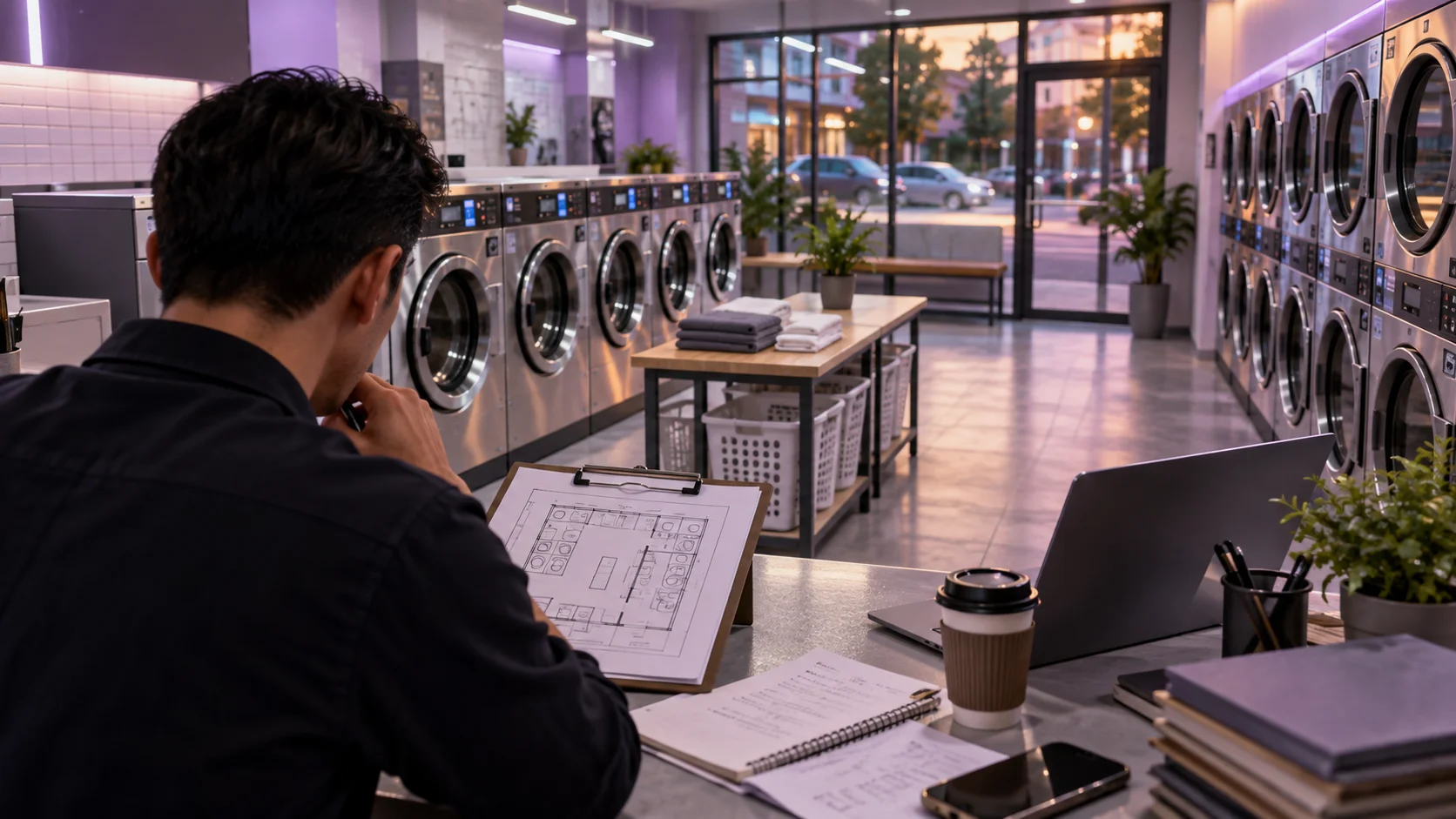
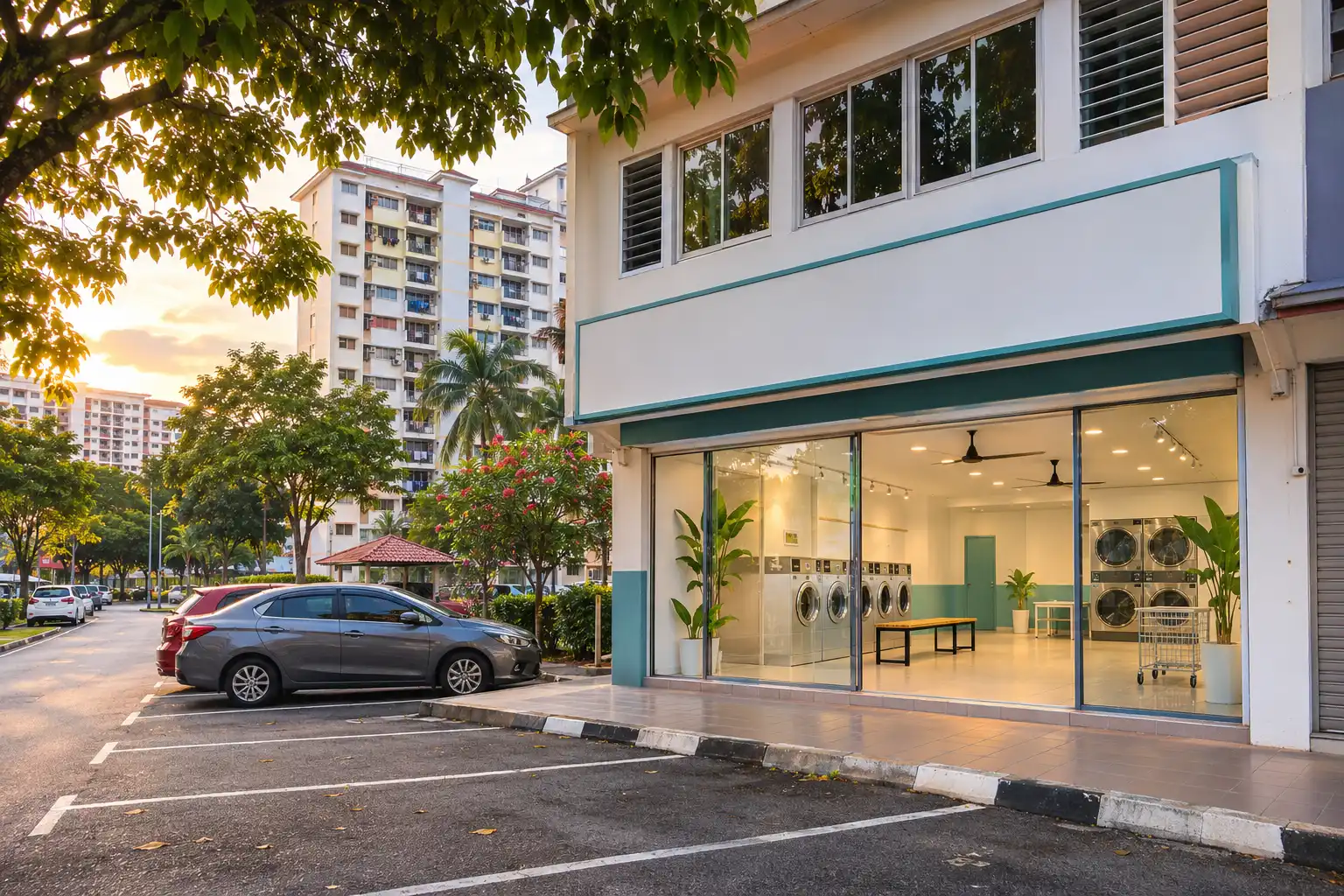
Most people planning a laundromat spend weeks comparing machines and barely a weekend looking at the shop lot. That’s backwards. You can swap a dryer in a day, but you can’t move a building. The spot you sign for will shape your customer flow, your electricity bill and your stress levels for years.
There’s plenty written about how much it costs to start a self-service laundry in Malaysia and about licensing. Far less explains how to actually judge a site. So here are the seven factors that matter most, plus a few mistakes worth avoiding before you pay a deposit.
Why Laundromat Site Selection in Malaysia Makes or Breaks the Business
A self-service laundromat sells convenience. Nobody drives across town to wash a duvet, so your real catchment is small, usually a few minutes on foot or by car. If that catchment is thin, no amount of promotion will fix it. If it’s strong, even an average shop can do well.
Good-looking sites also fail quietly on the technical side. A unit with weak power or narrow water pipes can cost thousands to correct after you’ve signed the lease. So location is partly about people and partly about utilities. We’ll cover both.
Factor 1: Footfall vs Residential Density
People often mix these two up. Footfall is how many people walk past. Residential density is how many people live close enough to become weekly regulars.
A busy shopping street gives great visibility, but passers-by rarely carry laundry. Dense housing gives you repeat customers. For most self-service shops, density wins. Look hardest at:
- High-rise condos and apartments with tiny balconies or no washer space
- Student hostels and rented rooms
- Workers’ quarters and shared housing
- Neighbourhoods full of singles and young couples
Walk the area at 8pm on a weekday, then again on a Saturday morning. You’ll learn more from those two visits than from any brochure.
Factor 2: Competitor Proximity and Local Demand
Competition isn’t always bad news. A few shops in one area can prove that demand exists. The trouble starts when several laundromats split the same handful of streets.
Map every laundromat within a kilometre or two, then visit them at peak hours. Are the machines full, or are people waiting around? Check how old the equipment looks and what they charge. A tired, crowded competitor is an opening. A shiny, half-empty one is a warning. Don’t forget dobi and wash-and-fold services either, because they chase the same customers.
Factor 3: The Anchor Tenant Effect
Anchor tenants are the businesses that pull people to a spot: a grocery shop, a mini market, a kopitiam, a clinic. Customers load the washer, then run errands or grab a drink. That small habit makes a 40-minute cycle feel painless.
Sitting next to an anchor also hands you free foot traffic. A laundromat tucked into a quiet corner with nothing nearby asks customers to make a special trip. Some will, once. Few will do it every week.
Factor 4: Car Park and Easy Access
Laundry means big bags and awkward baskets. People want to stop close, unload fast and go. Check these before you commit:
- How many free or cheap bays sit right outside
- Whether parking is time-limited or strictly enforced
- Easy access for motorbikes, which are everywhere in Malaysia
- A step-free entrance for trolleys and heavy bags
- Signage that can be seen clearly from the road
A shop that looks perfect on paper but has a nightmare car park will slowly lose customers to the one with easy stopping.
Factor 5: TNB Load Capacity
Commercial washers, and dryers especially, pull serious power. Plenty of shop lots were wired for a small office or a kopitiam, not a full row of machines. Ask the landlord what supply the unit already has, whether it’s single or three phase, and how much spare capacity is available.
Upgrading with TNB takes both time and money, and delays can push your opening back by weeks. Get a qualified electrician to review the load before you sign. A verbal “should be fine” from the landlord isn’t a check.
Factor 6: Water Pipe Sizing and Drainage
Water is the other big one. Washers fill quickly, and several running together need decent pressure and properly sized pipes. Ask about:
- Pipe size and water pressure at the unit
- Whether there’s a separate meter, and who pays for the connection
- Floor drains and where waste water actually goes
- Any hot water plans you might have
Weak water pressure means longer cycles and unhappy customers. Poor drainage means a flooded floor on a busy Sunday afternoon. Both are expensive to fix once the fit-out is done.
Factor 7: Lease Terms and Unit Layout
A great lot with a bad lease still isn’t great. Aim for a term long enough to recover your investment, with clear renewal conditions and sensible rent increases. Talk to a lawyer before signing, because lease wording is easy to misread.
Check the layout as well. Machines need floor space, and customers need a folding area and room to move. A very narrow, long lot can feel cramped, while a squarer unit usually fits better. Also confirm with the local council that the unit can be used as a laundromat.
Laundromat Location Scorecard
Use this quick table when you’re comparing two or three sites side by side.
| Factor | What to check | Green flag | Red flag |
|---|---|---|---|
| Residential density | Homes within walking distance | Many condos, hostels, rentals | Mostly offices, empty at night |
| Competitors | Shops within 1 to 2 km | Busy rivals with old machines | Several modern shops nearby |
| Anchor tenant | Nearby draws | Grocery or food outlet next door | Isolated corner lot |
| Parking | Bays and access | Easy, close stopping | Limited and enforced |
| TNB supply | Spare capacity | Confirmed in writing | Upgrade needed |
| Water and drainage | Pipes, pressure, drains | Strong supply, floor drains | Small pipes, weak pressure |
| Lease | Length and terms | Long term, clear renewal | Short, vague terms |
Common Mistakes When Choosing a Laundromat Site
- Falling for a cheap rent without checking power and water
- Choosing a busy road over a dense neighbourhood
- Visiting the site only once, at one time of day
- Ignoring competitors because “my shop will be better”
- Signing first and asking questions later
Getting Help With Site Assessment
You can do all of this on your own, but it’s tiring, especially for a first-time investor. The team behind Launch Laundry’s laundromat business consultancy and setup services includes site assessment as part of the process, from judging local demand to reviewing utilities before you commit.
It also helps to see how other operators got started. These real laundromat case studies give you a feel for what a good site looks like in practice. Once you’ve settled on a spot, you can start planning your commercial washers and dryers with the right power and water needs in mind.
Frequently Asked Questions
1. What is the best location for a laundromat in Malaysia?
Dense residential areas with condos, hostels or rented housing usually work best, especially near a grocery shop or food outlet, with easy parking close to the door.
2. How much foot traffic does a self-service laundromat need?
Less than a retail shop. Regular nearby residents matter far more than random passers-by, so check how many homes sit within a short walk.
3. How close can another laundromat be?
There’s no fixed rule. Map every shop within one or two kilometres, visit at peak hours and judge whether the area has room for another busy outlet.
4. Do I need three-phase power for a commercial laundromat?
It depends on your machines, especially the dryers. Confirm the existing supply with a qualified electrician and TNB before signing the lease.
5. What water supply does a commercial laundry need?
You need good pressure, properly sized pipes and solid drainage. A site assessment from a laundromat consultancy can flag problems before you commit.
6. Is a shop lot or a mall unit better for a laundromat?
Shop lots usually mean lower rent and easier parking. Malls bring traffic, but rent is higher and fit-out rules can be strict.
7. How long should my laundromat lease be?
Long enough to recover your investment, often several years with a renewal option. Have a lawyer read the terms first.
8. Can Launch Laundry help me assess a laundromat site in Malaysia?
Yes. Share your shortlisted units through the contact form and the team can walk you through demand, utilities and layout.
Ready to Pick the Right Spot?
A good laundromat location in Malaysia saves you money long after opening day. If you’ve got a shortlist, or even just an area in mind, book a free site assessment consultation and get a second opinion before you sign anything.