


What Happens When Your Laundromat Does Not Break Even on Schedule: Recovery Strategies
Most new laundromat owners dive into the business with a simple mental math equation: buy a few machines, pick a decent shoplot, and wait for the coins to pile up. It feels like a dream setup. But after six months of paying rent and utility bills while the revenue barely trickles in, the reality hits hard. That original break-even target? It keeps sliding further into the future. Watching your bank balance shrink instead of grow is a massive wake-up call, but it is not necessarily the end of the road. Profitability in this industry is rarely about luck. It is about grinding through the operational details, tightening up your efficiency, and mastering the upkeep of your hardware to stop those quiet revenue leaks. When your store fails to break even, your primary recovery tool is a disciplined approach to your bottom line, often requiring a well-stocked laundry machine maintenance kit to stop revenue leaks before they grow.
This Blog explores how to diagnose a struggling laundry business and pivot back toward consistent gains. You will learn how to identify profit killers, optimise your maintenance routines, and implement recovery strategies that actually move the needle.
Identifying the Hidden Profit Leaks
Before you can fix the problem, you need to find where the money is disappearing. If your monthly revenue barely covers your rent and utilities, you are likely suffering from profit leaks. These are small, invisible costs that drain your potential earnings over time.
- Inefficient Machine Performance: Old washers that take too long to fill or dryers that burn excessive gas without heating the clothes properly are massive money pits.
- Underutilised Capacity: Check your machine usage logs. If your largest machines are always sitting empty while smaller ones have queues, you’re pricing or machine mix is not aligned with your local customer needs.
- High Operational Waste: Excessive use of water due to leaks or high electricity consumption from lighting and inefficient vent systems adds up fast.
If you are constantly paying for emergency service calls, your overhead is likely bloated by reactive fixes. Having the right commercial washing machine repair parts on hand can save you a fortune in labour costs and prevent the out-of-order signs that drive your customers to the competitor down the street.
Keeping an eye on these leaks requires active management. Many owners think the business is passive, but in reality, it is a retail operation that demands your attention to the data. If you are not looking at your utility bills as a percentage of your total income, you are missing the biggest source of your financial stress.
Proactive Maintenance as a Recovery Strategy

One of the biggest reasons laundromats struggle to break even is the high cost of emergency repairs. When a machine breaks, you not only lose the repair fee but also the revenue that machine would have generated while it sits idle. This is why a rigorous maintenance schedule is your best defence against a shrinking profit margin.
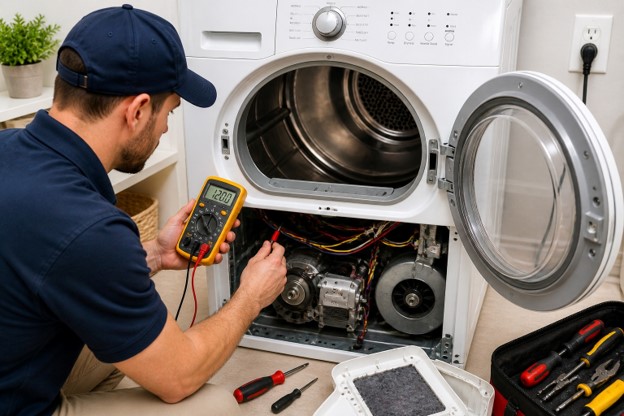
Treating your store like a high-performance facility instead of a passive income bucket changes everything. Your goal is to maximise machine uptime. If you can fix a minor belt issue yourself using the right commercial laundry service tools and parts before it causes the motor to burn out, you have effectively saved yourself a costly replacement bill and days of lost income.
Daily Checks: Wipe down seals, inspect payment terminals, and clear lint traps. A clean machine is a functional machine.
Monthly Service: Check for small leaks in deep smooth internal additives and water hoses. Small cracks, ignored, can lead to ground damage or pipe failures.
Quarterly Audit: Review your consumption income style. If one piece of equipment uses significantly more water than the others, it may have a faulty valve that wants attention on the spot.
Optimising Revenue Streams and Pricing
If your maintenance is on point and you still aren’t breaking even, it is time to look at your revenue generation. Many owners are afraid to adjust their costs, but a small increase in the turn price can often be the difference between a loss and a cost profit.
Consider adding value-added services if your space allows. Simple combinations like a vending machine for top-priced laundry detergent, special laundry bag service, or even near original seating with untethered internet can inspire customers to choose your location over a cheaper off-the-shelf store Focus on enjoying the whole customer as opposed to just the laundry process.
Putting Your Recovery Plan into Action
Turning a struggling business around requires patience and data. Start by tracking your machine usage daily to identify trends. If your busiest times are on weekends, ensure your preventive maintenance happens on low-traffic weekdays so your machines are ready for the peak.
Launch Laundry provides the expertise to help you identify these inefficiencies early. Whether we audit your equipment for higher performance or support you in creating a robust list of critical components, we will provide the help you need to get back on track financially. Consistency is your best asset in this business, and even small, daily updates will compound into a mile healthier bottom line over time.
Advanced Diagnostic Systems and Telemetry
Modern laundromat recovery relies heavily on digital tracking rather than guesswork. When your storefront falls behind its financial timeline, you need to know exactly how many times a specific washer spins every day. Installing advanced telemetry kits on older machines allows you to monitor cycle counts, water temps, and motor errors directly from your phone.
This precise data lets you see if certain machine sizes are sitting idle while others are constantly overworked.
If the telemetry shows that your large 25kg washers are only used three times a week, you can run targeted digital promotions specifically for heavy comforter washes on slow Tuesdays. Shifting from blind management to data-driven choices ensures that every ounce of water and gas directly contributes to your recovery fund.
Restructuring Fixed Leases and Debt Obligations

Property rent and equipment loan repayments make up the absolute largest portion of your fixed monthly liabilities. When your business is not hitting its target milestones, carrying these heavy expenses without negotiation can drain your remaining cash reserves. Approaching your commercial landlord with a transparent summary of your current transaction data can open the door for a temporary rent restructure or a brief base-rate reduction.
Lease Extension Trade-offs: Offer to extend your overall lease term by an extra two years in exchange for a lower monthly rental rate during your immediate recovery months.
Tiered Rent Frameworks: Propose a revenue-sharing model where your base rent drops slightly, but the landlord receives a tiny percentage of growth once your store crosses its break-even point.
Refinancing Equipment Financing: Contact your commercial equipment lender to stretch out your loan timeline, which lowers your immediate monthly cash outflow and gives your store breathing room.
Building Corporate and Commercial B2B Partnerships
Visitors to the perfect neighborhood retail footprint can leave your protection vulnerable to seasonal population drops or quiet routines. Tapping loan money from a local business-to-business business (B2B) bundle supplier can aggressively accelerate its way to solid damage even point Bound to close for your quietest morning establishments, offering low-cost laundry services without your conventional retail machine use your e.
Walk near small boutique lodges, local fitness centers, Splendor salons and restaurants that produce constant piles of dirty towels and linens every week Securing just two or three consistent commercial contracts provides a highly predictable weekly cash baseline that easily covers your fixed storefront overheads. This steady commercial volume keeps your cash flow positive while your main retail marketing campaigns continue to grow in the background.
Conclusion
Breaking even is just the first milestone in a long professional journey. If your laundry room is having trouble meeting this threshold, it’s time to transition from passive ownership to lively management. By specializing in aggressive preventative innovation, optimizing your utilization plan, and refining your pricing versions, you can effectively plug leaks you invest. Remember that frequent, small updates are more powerful than rigid, redundant revisions for those ready to turn their shop into a reliable profit centre, Launch Laundry offers the guidance and support needed to keep your business running smoothly every single day.
FAQs
Why do most laundromats fail to break even on their original schedule?
Many investors underestimate the ramp-up period required to build a local customer base. Additionally, failing to account for high utility costs and the inevitable expense of unexpected machinery repairs often derails initial financial projections.
How often should I perform preventive maintenance on commercial machines?
A professional-grade schedule includes daily checks of lint screens and seals, weekly inspections of hoses, and a deeper monthly audit of drive belts and motors. Consistency prevents costly emergency repairs.
Can I save money by doing my own basic machinery repairs?
Yes, you can significantly reduce labor costs by keeping a basic toolkit and essential components on hand. Minor fixes like changing a valve or a belt are well within the capability of most store owners, provided they have the proper parts and manuals.
What is the most common reason for machine downtime?
Neglected lint buildup and worn-out drive components are the primary culprits. Regular cleaning and timely replacement of worn parts significantly extend the life of your equipment.
Should I raise my prices if my store isn’t breaking even?
If your costs—rent, utilities, and parts—have increased and your maintenance is optimized, a price adjustment is often necessary. Ensure your pricing reflects the quality and reliability of your service compared to competitors.
How do I track which machines are most profitable?
Modern payment systems often provide usage logs that show which machines are used most frequently. Use this data to determine if you need to reconfigure your machine mix or adjust cycle times.
What are the essential parts I should keep in my storage room?
Always maintain a stock of common wear-and-tear components like drive belts, door seals, water valves, and drain hoses. Having these on-site reduces downtime from days to just minutes.
Does location play a bigger role than machinery in business recovery?
Both are critical, but a poor location is difficult to fix without moving. If your location is sound, the issue is almost always operational. Focus on cleaning, reliability, and service to improve your performance in your current spot.