



Water Pressure and Plumbing Requirements for Coin Laundry
Running a modern coin laundry depends on more than good machines and a strong location. The building’s utilities determine whether your store runs smoothly or struggles every day. Understanding laundromat plumbing requirements is essential before signing a lease or installing equipment.
In this blog, the influence of water pressure, piping, drainage systems, and heating systems on day-to-day operations is described. It includes what property owners and operators should prove and how a commercial washer is not the same as a residential one and what standards can be used to avoid downtime. The idea is straightforward: assist you in coming up with a space that facilitates large amounts of washing with no leakages, backups, or slow cycles.
Why Plumbing Standards Matter in a Coin Laundry
Coin laundries use far more water than any typical retail space. Each washer may fill and drain dozens of times per day. Multiply that by 20–60 machines, and small plumbing flaws become serious risks.
The consequences of poor utility planning include long fill times, partial rinses, drain backups and floor flooding. Fluctuations in pressure increase the wear of equipment, whereas ineffective heating increases the cost of energy. These problems interfere with the workflow, decrease the quality of the wash and affect the customers negatively.
A compliant, commercial-grade layout ensures machines operate within manufacturer limits and keeps your store open during peak hours.
Water Pressure for Commercial Washers
Every washer model lists a minimum and maximum operating pressure. Most commercial machines require between 30 and 90 PSI to function correctly. If pressure falls below the threshold, fill cycles slow and error codes appear. Excess pressure can damage valves and seals.
The water pressure commercial washer rating should be verified at the building’s main supply and again at the farthest machine in the row. Pressure drops can occur due to:
- Long pipe runs
- Undersized supply lines
- Multiple machines are filling at once
- Aging municipal infrastructure
How to Stabilize Pressure
Maintain water pressure, install a booster pump when supply is low, regulate equipment with regulators, size header to maximum demand and do not use residential piping. Many operators face fill issues after opening; testing under load before build-out prevents costly setbacks.
Pipe Sizing and Material
Commercial laundries need larger pipe diameters than homes. Typical recommendations include:
- 1½–2-inch main supply lines
- Dedicated hot and cold headers
- Individual branch lines sized per washer group
Copper, PEX-AL-PEX, or commercial-grade PEX are common. The key is consistency. Mixing old galvanized lines with new materials creates a pressure imbalance and sediment buildup.
Proper isolation valves should be installed for each row of machines. This allows maintenance without shutting down the entire store.
Drainage Capacity and Floor Layout
High-volume drainage is as critical as the water supply. Each washer releases large bursts of wastewater. If floor drains or trench systems cannot keep up, water backs up onto the floor.
Effective drainage design focuses on three principles:
- Gravity flow with minimal resistance.
- Large-diameter waste lines
- Clear access for cleaning and inspection
Commercial washers often discharge at 15–20 gallons per minute. Multiply that by several machines draining at once, and small pipes fail quickly.
Key Drainage Features
Effective drainage requires 4-inch or larger main waste lines, individual standpipes or trough drains for each row, and properly sloped floors toward collection points. Poor slope or undersized drains cause standing water, odors, mold, and potential health violations.
Hot Water Demand and Heating Systems
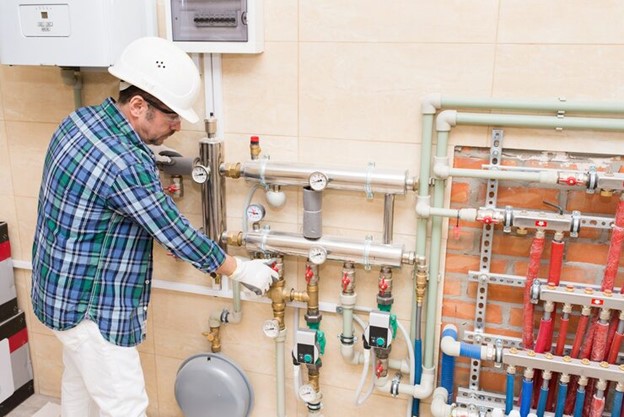
Wash quality depends on consistent temperature. A residential heater cannot support a full laundromat. A commercial hot water system must recover fast and deliver steady output during peak hours.
Most coin laundries use:
- Large-capacity gas heaters
- Tankless commercial units
- Central boiler systems
The system must support simultaneous fills from multiple washers without a temperature drop. Many operators size for peak morning and evening loads, not average use.
Planning Hot Water Capacity
Size your hot water system by calculating gallons per hour based on washer mix, allowing room for future expansion, and adding redundancy to avoid full shutdowns. Energy-efficient systems lower operating costs while maintaining stable temperatures across all machines.
Venting, Backflow, and Code Compliance
Plumbing codes vary by region, but most commercial laundries must meet additional standards:
- Backflow prevention on the water supply
- Air gaps on drain lines
- Grease and lint management traps
- Approved venting for waste lines
Local inspectors often require stamped engineering plans. These documents confirm that the system can handle volume and meet safety standards.
Skipping this step leads to failed inspections and costly rework after installation.
Common Planning Mistakes
Many first-time owners underestimate infrastructure needs. Frequent errors include:
- Assuming residential plumbing is “good enough.”
- Failing to test pressure under load
- Installing undersized drain lines
- Overlooking the heater recovery rate
- Ignoring local code variations
Each mistake creates operational friction. Machines idle, customers wait, and maintenance costs rise.
Build-Out Checklist for Operators
During site evaluation, measure both static and dynamic water pressure, confirm the main supply pipe size, and check floor slope and drain locations. Check heater capacity and type of fuel to use, order plumbing drawings prior to building and never forget about expansion in the future. Such actions reduce risks and secure your investment.
Conclusion
A coin laundry’s success depends on infrastructure that matches its workload. Water supply, drainage flow, and heating capacity shape every wash cycle. When these systems are designed for commercial demand, machines perform better, customers stay satisfied, and maintenance remains predictable.
Before committing to any space, review utilities with the same care as rent and foot traffic. A strong plumbing foundation prevents downtime and supports long-term growth. To stay organized during planning, request a buildout checklist that outlines critical infrastructure needs and timelines. For professional planning and turnkey support, partner with Launch Laundry.
FAQs
1. What is the minimum water pressure for commercial washers?
Most commercial washers require at least 30 PSI at the machine. Pressure should be tested while multiple units are filling to ensure real-world performance.
2. Can residential plumbing support a coin laundry?
In most cases, no. Residential systems lack pipe size, drain capacity, and heater recovery needed for high-volume use.
3. How large should drain pipes be in a laundromat?
Main waste lines are typically 4 inches or larger. Each washer row should have dedicated discharge points to prevent backups.
4. What type of water heater is best for a coin laundry?
Commercial gas heaters or centralized boiler systems provide the recovery rate needed for peak demand. Tank size alone is not enough; output per hour matters.